

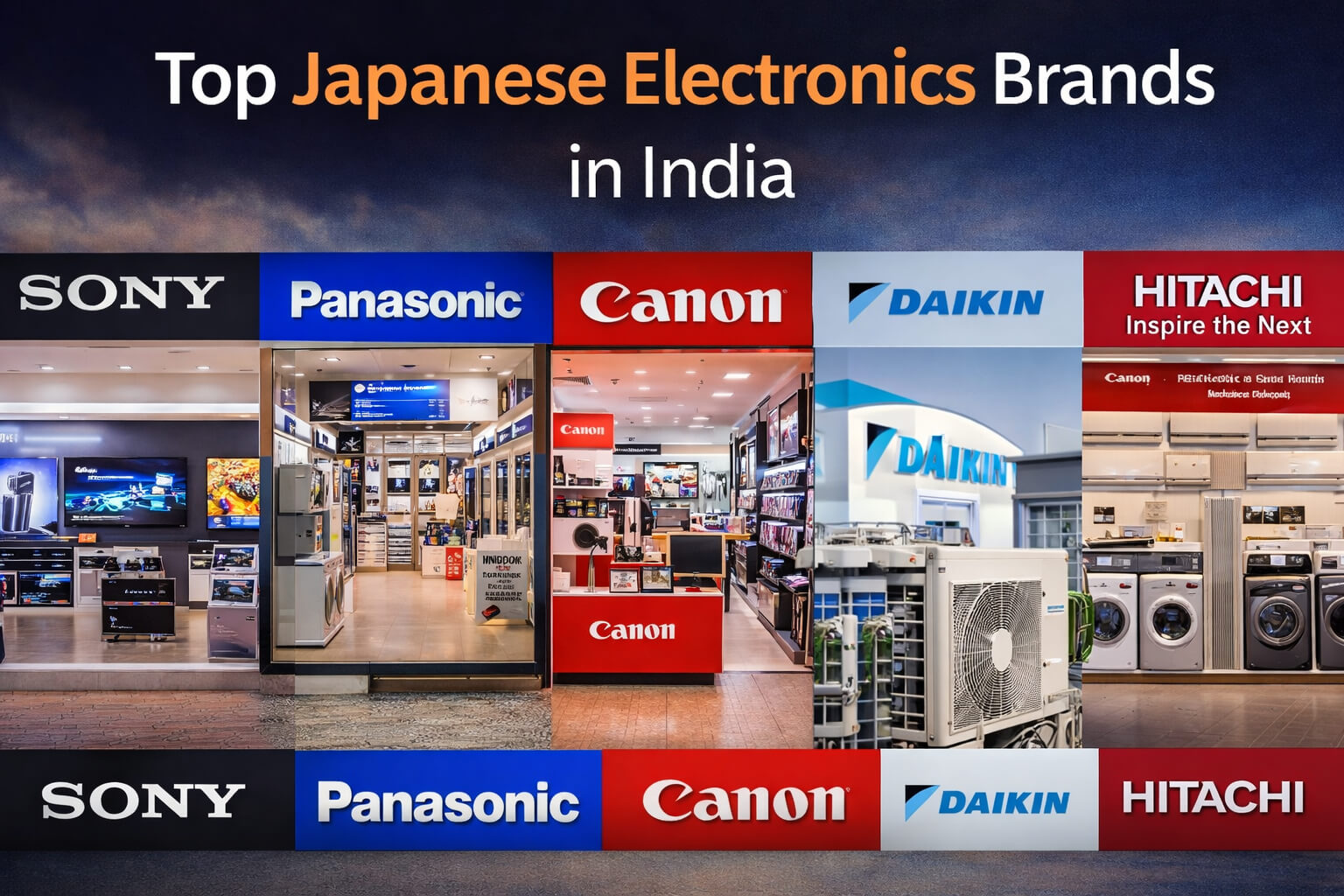
Japan has long been synonymous with engineering excellence, precision manufacturing, and long-lasting technology. For decades, Japanese electronics brands have shaped how Indians watch television, cool their homes, capture images, and interact with technology in everyday life. From premium consumer electronics to industrial-grade solutions, Japanese companies enjoy a deep level of trust in India—earned through consistent quality, innovation, and reliability.
Top 5 Japanese Electronics Brands in India
For readers of pralay.in, especially electrical engineers, electronics engineers, mechanical engineers, and science enthusiasts, Japanese brands represent more than just consumer products. They are case studies in manufacturing excellence, supply chain efficiency, R&D-driven growth, and successful localization in a complex market like India.
This article explores the top 5 Japanese electronics brands with a strong and established presence in India, how they operate, why they are trusted, and what engineers and technology enthusiasts can learn from their success.
Why Japanese Electronics Brands Succeed in India
Japanese companies approach the Indian market with a long-term vision. Instead of focusing only on short-term profits, they invest heavily in local manufacturing, workforce training, after-sales service, and product adaptation for Indian conditions such as voltage fluctuations, climate extremes, and heavy daily usage.
From an engineering perspective, Japanese brands emphasize reliability, energy efficiency, and design margins that ensure products continue functioning even under stress. This philosophy resonates strongly in India, where durability often matters more than cutting-edge novelty.
Sony: Premium Consumer Electronics and Entertainment Leadership
has one of the most iconic brand identities in India. Operating through Sony India Pvt. Ltd., the company is widely regarded as a leader in premium consumer electronics and digital entertainment.
Sony’s Bravia television lineup is known for superior display technology, color accuracy, and processing engines. Audio products—from home theaters to professional headphones—are equally respected. Beyond hardware, Sony’s PlayStation ecosystem dominates the gaming console market in India, blending electronics engineering with software and content innovation.
For electronics engineers, Sony stands out for its mastery of signal processing, imaging sensors, and miniaturization. The company’s leadership in CMOS sensor technology, widely used even by other brands, highlights Japan’s quiet dominance behind the scenes of global electronics.
Panasonic: Engineering-Driven Home Appliances for Indian Homes
has built a reputation in India as a dependable, engineering-focused brand offering a wide range of home appliances. Panasonic India Pvt. Ltd. manufactures and sells refrigerators, washing machines, air conditioners, microwaves, and batteries, many of which are produced locally.
What makes Panasonic particularly relevant to engineers is its focus on energy efficiency, inverter technology, and long-life components. The brand’s appliances are designed to operate reliably under varying power conditions, making them well-suited to Indian households.
Panasonic’s heavy investment in local manufacturing aligns with India’s “Make in India” initiative and demonstrates how global engineering standards can be adapted for local markets without compromising quality.
Canon: Imaging, Optics, and Precision Engineering
is a market leader in imaging technology in India, operating through Canon India Pvt. Ltd. The brand dominates the DSLR and mirrorless camera segments, as well as printers, scanners, and office imaging solutions.
Canon’s strength lies in optics, sensor technology, and mechanical precision—areas that deeply interest electronics and mechanical engineers alike. From lens design to high-speed image processing, Canon products showcase the integration of electronics, mechanics, and software at an elite level.
In India, Canon has built strong relationships with professionals, educational institutions, and businesses. Its emphasis on training, workshops, and service support has helped it maintain leadership in a competitive and rapidly evolving market.
Daikin: Air Conditioning Innovation and Manufacturing Scale
is often considered the gold standard in air conditioning technology. Through Daikin Airconditioning India Pvt. Ltd., the company has transformed the Indian AC market with inverter-based systems, energy-efficient designs, and large-scale local manufacturing.
Daikin’s manufacturing plants in India are among the largest in the country, reflecting the company’s confidence in long-term demand. From a mechanical and electrical engineering perspective, Daikin excels in thermodynamics, compressor design, control systems, and energy optimization.
The brand’s success highlights how advanced HVAC engineering, when combined with local production and service networks, can scale effectively in emerging markets.
Hitachi: Durable Appliances and Industrial Solutions
maintains a strong and trusted presence in India through Hitachi India Pvt. Ltd. While widely known among consumers for air conditioners and home appliances, Hitachi’s footprint extends far beyond consumer electronics.
Hitachi is deeply involved in industrial systems, power solutions, rail technology, and digital infrastructure. For engineers, this makes Hitachi particularly interesting as a company that bridges consumer products and heavy industry.
Hitachi’s home appliances, especially air conditioners, are known for durability and performance in harsh conditions—an attribute that resonates strongly with Indian consumers.
Other Notable Japanese Electronics Brands in India
Beyond the major players, several other Japanese brands have carved out strong niches in the Indian market.
is known for display technology, office equipment, and large-format professional screens.
has a presence in industrial electronics, storage solutions, and energy systems.
dominates the projector and inkjet printer markets, especially in education and small businesses.
These brands may not always dominate mass-market advertising, but they are highly respected in professional, industrial, and educational segments.
What Engineers Can Learn from Japanese Brands
For electrical, electronics, and mechanical engineers, Japanese electronics companies offer valuable lessons beyond products. Their approach to quality control, continuous improvement (Kaizen), and system-level thinking is worth studying.
Japanese brands design products to last longer, consume less power, and fail less often. This is achieved through conservative engineering margins, extensive testing, and a culture that prioritizes reliability over flashy specifications.
In an era of rapid technological change, this philosophy remains deeply relevant—especially for engineers working on infrastructure, energy systems, and mission-critical electronics.
The Role of Local Manufacturing in India
One of the key reasons Japanese electronics brands thrive in India is their commitment to local manufacturing. By setting up factories, training Indian engineers and technicians, and sourcing components locally, these companies reduce costs while maintaining global quality standards.
This localization strategy not only strengthens their market position but also contributes to India’s growing electronics manufacturing ecosystem. For engineering students and professionals, it opens up opportunities to work with global technology leaders without leaving the country.
Conclusion: Japanese electronics brands like Sony, Panasonic, Canon, Daikin, and Hitachi have earned their strong presence in India through decades of consistent performance, innovation, and trust. They represent a blend of advanced engineering, disciplined manufacturing, and thoughtful market adaptation.
As India continues to grow as a global hub for electronics manufacturing and technology innovation, the influence of Japanese companies will remain significant. For engineers, students, and science enthusiasts, these brands offer inspiration—not just as consumers, but as learners and professionals shaping the future of technology.