

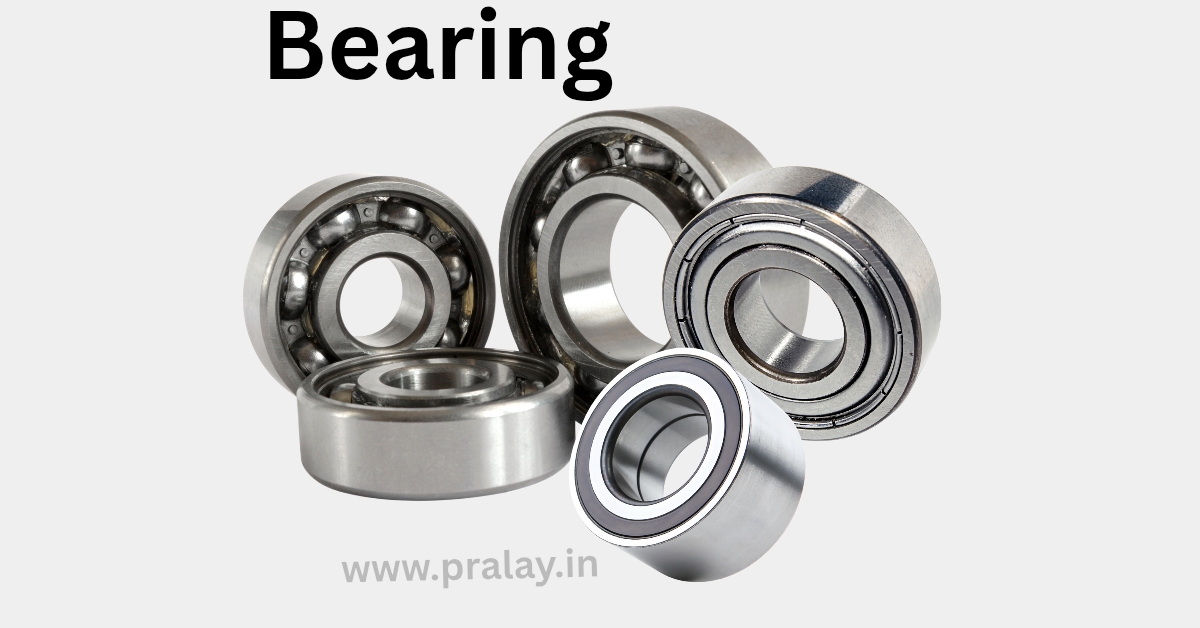
In the world of mechanical engineering, bearings play a vital role in ensuring smooth and efficient machine operations. From automobiles and turbines to household appliances and industrial equipment, bearings are present everywhere, silently supporting motion and reducing friction. Understanding their definition, types, functions, and applications is essential for engineers, manufacturers, and even students entering the field.
What is a Bearing?
A bearing is a mechanical component designed to support and guide moving parts, reduce friction between surfaces, and carry loads. By facilitating smooth rotation or linear movement, bearings increase efficiency, minimize wear and tear, and extend the lifespan of machinery. Without bearings, machines would consume more energy, produce excessive heat, and face frequent breakdowns.
Bearing Definition in Engineering
In engineering, a bearing is a mechanical component designed to support and guide rotating or moving parts while minimizing friction between them. Bearings are fundamental to the smooth and efficient operation of machinery, from small household appliances to massive industrial equipment. They allow controlled motion and carry loads, ensuring mechanical parts move seamlessly with reduced wear and energy loss.
According to ISO standards, a bearing is “a machine element that constrains relative motion and reduces friction between moving parts.” This concise definition captures its dual function: providing support and facilitating movement.
Importance and Function of Bearings
The primary role of a bearing is to reduce friction and support loads. Friction causes heat, wear, and energy loss in mechanical systems. Bearings minimize these effects by using smooth rolling or sliding surfaces between components. They support radial loads (acting perpendicular to the shaft) and axial loads (acting along the shaft’s axis), depending on design and application.
Without bearings, mechanical systems would suffer rapid deterioration due to direct metal-to-metal contact. In an automotive engine, for example, bearings allow the crankshaft to rotate freely under immense pressure, maintaining efficiency and longevity.
Types of Bearings and Their Applications
Though numerous in design, bearings generally fall into two categories: rolling-element bearings and plain (or sliding) bearings. Rolling-element bearings, such as ball and roller bearings, use spherical or cylindrical elements to reduce friction. Plain bearings, on the other hand, rely on a lubricating film to allow smooth motion between surfaces.
Ball bearings are common in electric motors and household fans, while roller bearings support heavy loads in conveyor systems and railcars. Thrust bearings handle axial loads in automotive transmissions, and journal bearings are widely used in turbines and compressors.
Types of Bearings
Bearings are classified based on motion type, load capacity, and design. The most common types include:

Ball Bearings – Widely used in household appliances, electric motors, and automotive systems. These bearings use spherical balls to reduce friction and support both radial and axial loads.
Roller Bearings – Designed with cylindrical or tapered rollers, they are suitable for heavy-duty applications, such as conveyor systems, gearboxes, and railways, where they can handle larger loads compared to ball bearings.
Plain Bearings – Also known as bushings, these have no rolling elements and work by sliding motion. They are simple, cost-effective, and commonly found in automotive engines and turbines.
Thrust Bearings – Specifically built to handle axial loads, these bearings are essential in automotive transmissions, rotary tables, and marine applications.
Magnetic Bearings – A modern innovation that uses magnetic levitation to support loads without physical contact. They are applied in high-speed turbines, medical devices, and aerospace technologies.
Applications of Bearings
Bearings are used across almost every industry, making them indispensable in modern technology. In the automotive sector, they are found in engines, wheels, transmissions, and steering systems. In industrial machinery, bearings support conveyors, pumps, compressors, and turbines. The aerospace industry relies on specialized bearings to withstand extreme temperatures and loads, while in the medical field, precision bearings are critical for diagnostic equipment and surgical tools. Even everyday items like fans, washing machines, and bicycles operate smoothly thanks to bearings.
Engineering Significance and Material Considerations
Modern engineering emphasizes the precision and durability of bearings. They are typically made from hardened steel, ceramics, or polymers to withstand wear, temperature variations, and chemical exposure. Advanced coatings and lubricants further enhance performance, reducing maintenance costs and extending operational life.
According to a 2023 report by MarketsandMarkets, the global bearing market size is projected to reach over USD 250 billion by 2030, reflecting the growing demand in automotive, aerospace, and energy sectors. This underscores how critical bearings are in driving innovation and efficiency across industries.
Materials Used in Bearings
The material selection for bearings is critical because it directly affects performance, durability, and cost. Common materials include:
- Steel Alloys – High-carbon chrome steel is the most widely used material due to its hardness, fatigue resistance, and affordability.
- Ceramics – Lightweight and resistant to heat, ceramic bearings are used in high-speed applications where minimal friction and corrosion resistance are required.
- Bronze and Brass – Ideal for plain bearings, these metals offer low friction and good wear resistance.
- Polymers and Composites – Used in lightweight applications, polymers provide quiet operation and corrosion resistance.
Frequently Asked Questions (FAQ) About Bearings
Q1: What is the main function of a bearing?
The main function of a bearing is to reduce friction between moving parts, support loads, and ensure smooth and efficient motion in machines.
Q2: What are the common types of bearings?
The most common types of bearings include ball bearings, roller bearings, plain bearings, thrust bearings, and magnetic bearings, each suited for specific load and motion requirements.
Q3: Which materials are used to make bearings?
Bearings are typically made from steel alloys, ceramics, bronze, brass, and polymers. The choice of material depends on load capacity, operating conditions, and cost considerations.
Q4: Where are bearings used in daily life?
Bearings are used in everyday items such as bicycles, fans, washing machines, cars, and electric motors, as well as in advanced applications like aerospace, medical equipment, and turbines.
Q5: How do I choose the right bearing?
Selecting the right bearing depends on factors such as load type, speed, operating temperature, environmental conditions, and desired lifespan of the machinery.
So friends, I’m Pralay Bhunia, I hope I’ve been able to help you with this information about Bearings. If you have any more questions or suggestions, please feel free to share them in the comments. Your support always inspires me to share more new information.
External link
- NSK Global: What is a Bearing?