What is an electric circuit begins our exploration of one of the most fundamental concepts in electrical engineering and everyday electronics. The term “electric circuit” may sound simple, but its implications span from the tiny circuit board inside a smartphone to the vast power grids that light entire cities. In this article i will unpack exactly what is an electric circuit, examine its essential components, delve into how it works, explore its types and common applications, and consider the practical and historical perspectives that make circuits so vital today.
Understanding the Definition – What Is an Electric Circuit?
At its core, an electric circuit is defined as a closed loop or pathway through which electric current can flow to perform work. According to the Encyclopaedia Britannica, “An electric circuit includes a device that gives energy to the charged particles constituting the current … and the connecting wires or transmission lines.” Other authoritative sources describe a circuit as “a closed loop network which provides a return path for the flow of current.” Thus the key elements embedded in the definition are: a source of energy, a conductive path, and a load or device that uses the current.
When one asks “what is an electric circuit,” one must understand that without continuity — without that closed loop — the circuit cannot fulfil its purpose. The educational text from The Physics Classroom emphasises this: “When there is an electric circuit light bulbs light, motors run, and a compass deflects … the circuit involves the flow of charge in a complete conducting loop.”
The notion of “flow of charge” and “closed conducting loop” is central. Without both, the circuit ceases to function. This definition sets the stage for the deeper discussion on components, operation, types, and applications that follow.
The Essential Components of an Electric Circuit
In order to grasp fully what is an electric circuit, it is instructive to examine the essential components that any functional circuit must include. According to multiple educational sources, these components typically include a power source, conductors, a load or device that consumes energy, and often a switch or control mechanism.
Power Source
The power source provides the potential difference that drives current through the circuit. It could be a battery, a generator, or any voltage source. Without this, no current flows — meaning the circuit remains inactive.
Conductive Path (Wires/Connections)
The conductive pathway links the source and the load, enabling the flow of electrons (or charge carriers). As noted in texts, the pathway must be continuous; any break means the circuit is “open” and current cannot flow.
Load or Device
The load is the element that uses the electrical energy to perform work: a light bulb, motor, resistor, electronic device, etc. The energy delivered by current is converted into another form: light, heat, mechanical motion, or signal processing.
Control Element (Switch, Fuse, etc.)
Often a circuit includes a control element like a switch or breaker (MCB) to open/close the circuit, providing safety and operational control. The presence of such control underlines that what is an electric circuit is not simply a loop, but one that is often managed and protected.
By understanding these elements, one can better appreciate more complex aspects, because any real-world circuit is built from these fundamentals.
How an Electric Circuit Works
Having defined what is an electric circuit and looked at its components, the next step is to understand how it operates. At heart, the mechanism involves creating a continuous closed loop in which electrons (or charge carriers) move under the influence of a potential difference, through a conductive path, traversing a load and returning to the source.
The Principle of Continuity
Continuity in the loop is essential. As one instructional resource explains: “A circuit is an unbroken loop of conductive material that allows charge carriers to flow through continuously without beginning or end. If a circuit is ‘broken’, charge cannot flow.” When a user turns off a switch, the loop is broken; current stops. That simple fact underpins much about circuit safety and design.
Flow of Current and Potential Difference
When a source applies a potential difference (voltage), electrons in the conductor respond by moving from the negative side toward the positive side (in conventional terms, we often say current flows from positive to negative). This flow is what powers the load. For example, when you close a switch for a flashlight, electrons travel from the battery, through the filament, causing it to glow, and then return to the battery.
A practical takeaway: The mere presence of a battery connected to a bulb does not cause glowing until the loop is completed.
Series vs Parallel Connections
To deepen our understanding of how a circuit works, one must recognise that the way components are connected matters. Two primary topologies exist: series and parallel. In a series circuit, all components share one single path; if one opens, the entire circuit stops. In a parallel circuit, branches exist such that one branch can fail and the others may still function. These differences affect the behaviour of circuits in terms of voltage, current, and reliability.
Open Circuits, Closed Circuits & Short Circuits
Terms like open circuit (where continuity is broken, so current stops), closed circuit (complete loop, current flows) and short circuit (an unintended low resistance path drastically increasing current) are important. For example, a short circuit places heavy risk of damage, overheating or fire because current flows too easily bypassing the load.
In summary, when asking what is an electric circuit, the answer lies not just in the definition but in the dynamic process: source drives potential, current flows in a loop, load uses energy, conduction happens through continuous path. Interrupt any part and the circuit’s function is altered or halted.
Types of Electric Circuits and Their Distinctions
Understanding what is an electric circuit fully means appreciating that circuits are not monolithic; they come in several types based on connection pattern, current type, and complexity.
Based on Connection: Series and Parallel
As mentioned earlier, series circuits feature components connected in a single loop. The current is the same through all components, but voltage divides among them. Conversely, in a parallel circuit, voltage across each branch is the same but currents may vary. Recognising these distinctions helps when designing or analysing circuits in real applications.
Based on Current Type: DC and AC Circuits
Circuits may also be categorised by whether they use direct current (DC) or alternating current (AC). A DC circuit uses current flowing in one direction; an AC circuit has current that reverses direction periodically. The difference influences design, components and performance.
Open, Closed and Short Circuits
We’ve touched on them, but when you ask what is an electric circuit, you should also know the non-ideal forms: open circuit (path broken, no current), closed circuit (normal operation), short circuit (unexpected low resistance path). Each represents a different circuit state and affects safety and functionality.
Complex Networks and Electronic Circuits
Beyond simple loops, circuits may form complex networks, combining resistors, capacitors, inductors, active devices (transistors, diodes) and more. Such circuits are not just about flow of current but processing of signals, amplification and conversion. According to Wikipedia: “An electronic circuit is composed of individual electronic components such as resistors, transistors, capacitors … connected by conductive traces.”
Thus, when we inquire “what is an electric circuit,” we must realise that the term covers both simple single-loop systems and highly complex networks used in modern electronics.
Practical Applications and Real-World Significance
Why does understanding what is an electric circuit matter? Because circuits are the building blocks of virtually all electrical and electronic devices, from the humble flashlight to the supercomputer.
Everyday Household and Industrial Use
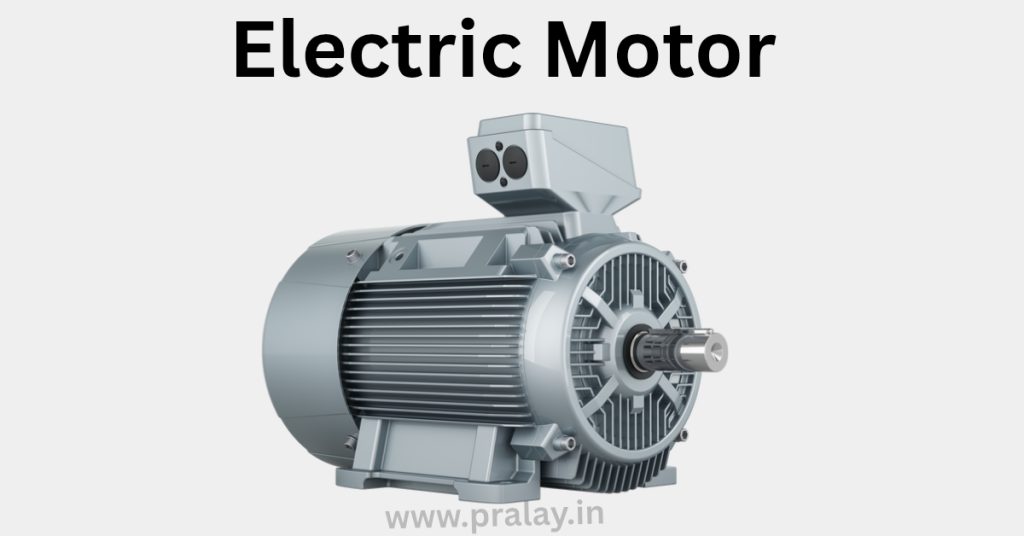
In our homes, appliances utilise circuits to deliver power, process control, and ensure safety. For instance, electrical wiring in a home forms circuits that include sources, protective devices, loads and switches. Industrial machines rely on complex circuits to automate tasks, monitor conditions, and drive systems.
Electronic Devices
Smartphones, computers, tablets, and virtually all modern electronics embed multiple layers of circuits. These devices integrate circuits to manage signals, power, sensors, communications and more. As noted earlier, electronic circuits are a subset of electric circuits, involving active components.
Renewable Energy, Power Grids & Infrastructure
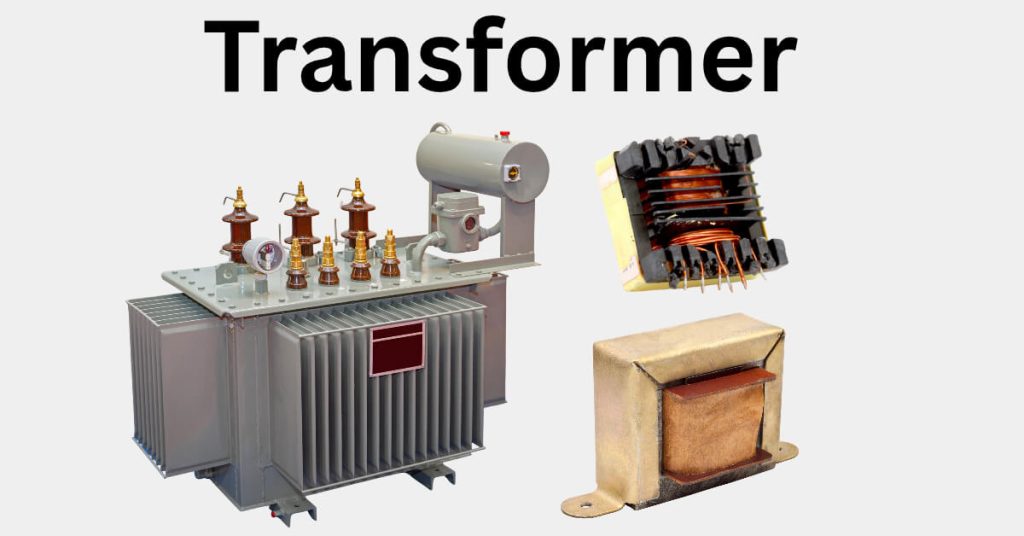
On a larger scale, power generation and transmission systems rely on massive overhead and underground circuits which include transformers, conductors, protection devices and more. The concept of a circuit here extends to grid-scale systems, which highlights how foundational the idea of a loop and current path is in all levels of engineering.
By exploring applications, one sees that the question “what is an electric circuit” is not academic — it is deeply practical, underpinning the world’s infrastructure.
Key Principles and Laws Governing Electric Circuits
To deepen insight into what is an electric circuit, one must at least mention the fundamental principles that govern their behaviour.
Ohm’s Law
One of the basic laws of circuits is Ohm’s Law, which states that current (I) through a conductor between two points is directly proportional to the voltage (V) across the two points and inversely proportional to the resistance (R). In equation form: V = I × R. Many circuit analyses begin with this law.
Kirchhoff’s Laws
Another set of key principles are Kirchhoff’s circuit laws. These include the current law (sum of currents entering a junction equals sum leaving) and the voltage law (sum of voltages around a closed loop is zero). Such laws provide rigorous understanding of what is an electric circuit’s behaviour in multi-component networks.
Energy Conservation and Power in Circuits
Energy delivered by the source is converted by loads into heat, light, motion or other forms. Power (P) in a circuit is given by P = V × I. The conservation of energy principle ensures that energy neither appears nor disappears — it is simply transformed by the circuit elements.
Understanding these principles helps engineers design safe, efficient and functional circuits, and reminds us that the question “what is an electric circuit” entails both physical structure and mathematical behaviour.
Safety, Design Considerations and Common Mistakes
When reflecting on what is an electric circuit, it’s equally important to consider safety and design aspects, because a circuit is only useful when properly designed and safely implemented.
Importance of Correct Connections, Insulation & Protection
A circuit must be properly connected: wires must be insulated, components rated for the correct voltage/current, and protective devices (fuses, circuit breakers) included to guard against faults. Many real-world failures stem from open circuits, short circuits, or overloads.
Understanding Short Circuits and Their Risks
A short circuit occurs when an unintended low-resistance path allows excessive current, bypassing the intended load and potentially causing damage or fire. The definition from Wikipedia on “short circuit” outlines how a fault current many times higher than normal may flow and cause overheating and damage.
Designing for Reliability and Efficiency
When engineers design circuits, they must consider component ratings, environmental conditions, thermal management, redundancy (especially in parallel circuits), and signal integrity. If one misunderstands what is an electric circuit, design errors can lead to inefficiencies, faults, or even hazards. Real-time reliability is as important as theoretical correctness.
Historical Perspective – How Electric Circuits Have Evolved
To enrich our understanding of what is an electric circuit, let’s glance at the historical development of circuit concepts.
In the early 1800s, pioneers such as Alessandro Volta developed the voltaic pile, enabling continuous current through a closed loop of bowls of salt solution and metal strips. Over subsequent decades the idea of closed conductive loops, load conversion of electric energy, and protective design matured, forming the basis of modern electric and electronic circuits.
As we moved into the 20th and 21st centuries, circuits went from large mechanical relays to printed circuit boards and integrated circuits, with miniaturisation and complexity growing rapidly. Today’s view of “what is an electric circuit” includes microchips with millions of circuit elements on a single silicon wafer, a far cry from the simple loop of early experiments.
Understanding this evolution helps appreciate not only the definition of an electric circuit, but its application, design and significance in the modern world.
Summary — Why Knowing What Is an Electric Circuit Matters
In summary, when asking what is an electric circuit, the answer encompasses much more than a textbook definition. It involves recognition of the closed loop that allows current to flow, the components that make this possible, the principles that govern such flows, the types of circuits used in practice, and the design and safety aspects that make circuits viable and reliable.
An electric circuit is the fundamental building block of all electrical and electronic systems. Whether you are turning on a light, charging a phone, running machinery, or designing a microprocessor, the concept of a circuit underpins the functionality. By grasping the meaning, components, operation, types, applications and design considerations, one is better equipped to navigate, analyse or build systems that involve electricity in safe and effective ways.
For readers who wish to explore more, you might check our article “Difference Between AC and DC Current” which describes how circuits differ when current type, direction and waveform vary.
External Resources
For further detailed reading:
- “What are Electric Circuits?” from All About Circuits. (allaboutcircuits.com)
- “Electric Circuit” entry on Britannica. (britannica.com)