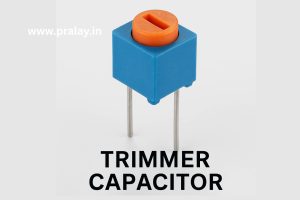
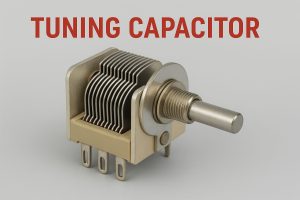
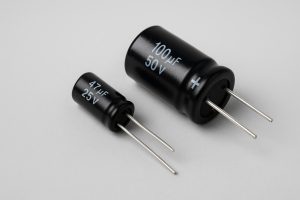
Through-Hole Technology (THT) is one of the oldest and most reliable techniques used in electronic manufacturing. Although Surface-Mount Technology (SMT) has dominated modern electronics, THT still plays an essential role in high-power circuits, mechanically stressed environments, and industrial applications where durability is more critical than miniaturization. It continues to be found in power supplies, aerospace devices, automotive systems, prototype circuits, and educational experiments. Its long-term reliability and strong physical bonding make it a preferred choice in mission-critical applications.
What is Through-Hole Technology (THT)?
Through-Hole Technology is a PCB assembly technique where electronic components are inserted into holes drilled through the printed circuit board and soldered on the opposite side. Unlike SMT, which places components on PCB surfaces, THT relies on mechanical insertion and soldering for strong electrical and physical connections. The components used in this process are known as THT components and include resistors, capacitors, diodes, LEDs, ICs, and connectors with leads or pins.
THT was the industry standard before the rise of SMT and is still preferred when high reliability, vibration resistance, and robustness are required. While automation is possible, many THT assemblies involve manual soldering, making it valuable for prototyping, testing, and low-volume production.
Working Principle and Assembly Process of THT
The working of Through-Hole Technology follows a structured assembly procedure. First, holes are drilled into the PCB according to the component layout. The THT components are inserted manually or by automated insertion machines. After placement, the PCB undergoes soldering—either wave soldering for mass production or hand soldering for custom and prototype work. The leads are soldered to create a strong mechanical and electrical connection between the component and PCB.
This method allows excellent heat dissipation and ensures durability in demanding environments. As a result, THT is still widely used in aerospace, automotive, industrial control, and high-performance power systems, where failure is not acceptable.
Related topics

Types of Through-Hole Components
THT components are typically categorized into Axial Lead Components and Radial Lead Components. Axial components have leads extending from both ends and are mounted horizontally. They are commonly used for resistors, diodes, and some capacitors. Radial components have both leads coming from the same side and are usually mounted upright, saving board space. Examples include electrolytic capacitors, LEDs, and small relays.
Integrated circuits in THT form, such as Dual-Inline Package (DIP) ICs, remain highly popular in prototyping and educational circuits due to their ease of handling and soldering. Compared to SMT chips, THT components are easier to troubleshoot and replace.
Why THT Is Still Used in Electronics
Despite the rapid growth of SMT, Through-Hole Technology remains significant in modern manufacturing. It provides stronger physical bonding, making it ideal for circuits that face vibration, mechanical stress, or extreme environments. For power electronics, THT offers better heat dissipation and higher current handling capabilities. Designers also prefer THT in prototype circuits, educational labs, and test platforms because components are easier to adjust, measure, and replace.
Furthermore, THT is often used in high-voltage equipment, military-grade electronics, industrial control systems, transformers, and relay circuits where long-term reliability is a critical requirement.
Applications of Through-Hole Technology
Through-Hole Technology continues to be used in multiple industries, particularly those focusing on reliability and long-term stability. In aerospace systems, heavy-duty sensors and control modules rely on THT for performance stability. In automotive sectors, THT components are used in engine controllers, ignition systems, and power distribution circuits. Industrial automation uses THT in PLCs, relays, motor drivers, and power converters.
In medical electronics, reliability is essential, and THT is used in monitoring devices and surgical instruments. Audio equipment and radio transmitters also utilize THT components for heat resistance and better power handling.
THT is also widely used in:
- Power supply circuits
- Transformer and relay modules
- High-voltage applications
- Research labs and prototyping
- Educational and training kits
Advantages of THT
THT offers strong solder joints and better durability than SMT. It provides improved mechanical strength, which is crucial in vibrating or high-stress environments. Its ability to handle large current and voltage loads gives it an edge in power electronics. Additionally, THT components are easier to insert, measure, and replace, making prototyping simpler and more efficient.
Due to its long history, THT components are widely available and supported by countless datasheets, testing standards, and industry documentation, making engineering and troubleshooting straightforward.
Limitations of THT
The main limitation of THT is its incompatibility with miniaturization and ultra-high-density circuit designs. Drilling holes increases PCB manufacturing cost and reduces available space for compact layouts. The manual soldering process increases labor effort, making mass production slower and more expensive compared to SMT.
However, hybrid designs combining SMT with selected THT components are commonly used today. For example, modern PCBs often use SMT for small components and THT for connectors, switches, and high-power elements.
Future of Through-Hole Technology
While SMT dominates modern electronics manufacturing, THT is not disappearing. It is expected to remain in areas where ruggedness, durability, and high power handling are essential. The aerospace, automotive, military, industrial, and medical sectors will continue to rely on THT in mission-critical circuits. Additionally, THT will persist in research laboratories, educational institutes, and prototype development.
Through-Hole Technology (THT) vs Surface-Mount Technology (SMT)
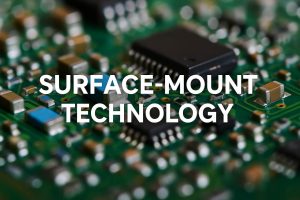
Through-Hole Technology (THT) and Surface-Mount Technology (SMT) are two major methods used for mounting electronic components on printed circuit boards. The key difference lies in their assembly process and physical mounting style. THT uses drilled holes to place component leads through the PCB and solder them from the opposite side, providing strong mechanical bonding. SMT, on the other hand, mounts components directly on the PCB surface using solder paste and automated reflow soldering, allowing higher manufacturing speed and smaller component size.
THT is bulkier than SMT but offers greater durability and reliability, especially in vibration-prone or high-stress environments. This makes it suitable for aerospace, military, power applications, and industrial control systems. SMT is preferred for modern electronics such as smartphones, IoT devices and consumer gadgets, where miniaturization and automation are critical. SMT supports high-density circuit designs and multi-layer PCBs more efficiently than THT.
When it comes to manufacturing complexity, SMT easily supports high-speed automated placement using pick-and-place machines, while THT often requires manual insertion and slower assembly, resulting in higher production cost. However, THT is still favored for prototyping, testing, repairability, and educational training because components are easy to handle and replace.
In summary, THT provides strong mechanical connection and long-term reliability, whereas SMT offers speed, compactness and high production efficiency. Many industries now use mixed-technology PCBs, combining SMT for miniaturization and THT for strength, ensuring optimal performance and cost efficiency.
Certainly! Here is a clean, SEO-friendly, WordPress-ready comparison table between Through-Hole Technology (THT) and Surface-Mount Technology (SMT):
THT vs SMT – Comparison Table
| Parameter | Through-Hole Technology (THT) | Surface-Mount Technology (SMT) |
|---|---|---|
| Mounting Method | Components inserted through PCB holes | Components mounted directly on PCB surface |
| Component Size | Larger and bulkier | Very small and compact |
| Assembly Process | Often manual or semi-automated | Highly automated and high-speed |
| PCB Density | Low to medium density | High-density and multilayer compatible |
| Mechanical Strength | Very strong and durable | Moderate mechanical bonding |
| Frequency Performance | Limited due to long leads | Excellent for high-frequency circuits |
| Heat Dissipation | Better for power components | Requires thermal management |
| Power Handling | Good for high-current circuits | Moderate power capability |
| Assembly Cost | Higher for large-scale production | Lower in mass manufacturing |
| Repair/Replacement | Easier for prototyping & testing | More difficult to repair |
| Typical Applications | Aerospace, automotive, power systems | Smartphones, IoT devices, computers |
| Soldering Process | Wave or hand soldering | Reflow soldering |
| Inspection Method | Manual or AOI | AOI & X-ray inspection |
| Prototyping Suitability | Ideal for testing & education | Less suitable for manual experiments |
| Industry Adoption | Used in critical/high-power systems | Dominant in modern electronics |
Frequently Asked Questions – FAQ
1. What is Through-Hole Technology?
THT is a PCB assembly method where component leads are inserted into drilled holes and soldered on the opposite side.
2. What are THT components?
Components with leads or pins that go through PCB holes, such as resistors, capacitors, diodes, and DIP ICs.
3. Why is THT still used today?
It provides strong mechanical bonding and is ideal for high-power and high-reliability applications.
4. What is the main difference between THT and SMT?
THT uses drilled holes for mounting, while SMT places components directly on the PCB surface.
5. Where is THT commonly used?
In aerospace, automotive systems, power electronics, industrial machines, and prototyping.
6. Can THT be automated?
Yes, automated insertion and wave soldering are used in mass production, but manual soldering is still common.
7. What is wave soldering?
A technique where PCBs are passed over a wave of molten solder to connect THT components efficiently.
8. Are THT components easy to repair?
Yes, they are easier to remove, inspect, and replace compared to SMT components.
9. What type of PCB is used for THT?
Single-layer and double-layer PCBs are most common, although mixed technology is also used.
10. What are axial and radial components in THT?
Axial components have leads on both ends, while radial components have both leads on the same side.
11. Why is THT preferred in prototypes and labs?
Because components are easy to handle, measure, and modify during testing.
12. Does THT support high-frequency circuits?
Not ideal for high-frequency use due to longer lead lengths causing signal interference.
13. Do THT components require more PCB space?
Yes, THT components are larger and need drilled holes, reducing PCB density.
14. Can THT handle high current?
Yes, THT components are suitable for high-power and heat-dissipating applications.
15. Will THT be replaced by SMT?
SMT dominates mass production, but THT will continue in critical and high-power applications.
So friends, I’m Pralay Bhunia, I hope I’ve been able to help you with this information about Through-Hole Technology (THT). If you have any more questions or suggestions, please feel free to share them in the comments. Your support always inspires me to share more new information.
External link:
- Lesser, Roger; Alderton, Megan (2002-01-01). “The Future of Commercial Aviation”. Mobile Development and Design Magazine.
- Charpentier, Stephane (2010-03-10). “Fabrication: Visiting a production line of Kingston memory modules”. PC World (France) (in French). Archived from the original