Modern electronic systems require stable and reliable protection against voltage spikes and transient surges. From household appliances to industrial automation, unexpected electrical disturbances can damage sensitive circuits within milliseconds. This is where varistors, commonly known as Voltage Dependent Resistors (VDRs), become essential. Varistors play a critical role in ensuring the safety and longevity of electronic devices by clamping excessive voltage and absorbing surge energy. Their widespread use in power systems, communication equipment, consumer electronics, and industrial drives highlights their significance in electrical protection technology. This article explains the definition, working principle, types, materials, and applications of varistors in a structured
What is Varistor (VDR)
Definition: A varistor is an electronic voltage-dependent resistor whose resistance changes with the applied voltage. At normal operating voltage, the varistor has very high resistance, allowing minimal current to pass. When the voltage exceeds a specified threshold, the varistor’s resistance rapidly decreases, allowing it to absorb and divert the excess energy away from sensitive circuitry.
The term “varistor” comes from the combination of “variable” and “resistor,” illustrating its dynamic resistance-changing property. Varistors are primarily used for transient voltage suppression, providing a fast and reliable method of protecting devices from voltage spikes caused by lightning strikes, switching transients, electrostatic discharge (ESD), and power line fluctuations.
Among all types, the Metal Oxide Varistor (MOV) is the most popular and widely used due to its high efficiency, low cost, and excellent surge handling capacity.
Varistors Working Principle
The working principle of a varistor is based on the nonlinear voltage–current characteristics of semiconductor materials. Unlike ordinary resistors, which follow Ohm’s law, a varistor exhibits a nonlinear response where the current rises exponentially when voltage crosses a specific threshold known as the clamping or breakdown voltage.
Related topics

A typical varistor behaves almost like an open circuit under normal voltage conditions. When a sudden voltage spike occurs, the varistor transitions to a conductive state within nanoseconds, providing a bypass path for the surge current. This behavior protects the connected load by limiting the excessive voltage to a safe level.
The voltage-current relation of a varistor is described by the equation:
I = K × Vⁿ
Where:
• I = Current through the varistor
• V = Applied voltage
• K = Material constant
• n = Nonlinearity coefficient (higher values indicate better performance)
Metal oxide varistors, in particular, are made from zinc oxide grains surrounded by insulating boundaries, forming a network of semiconductor junctions. These junctions act like numerous back-to-back diode pairs. When a high voltage is applied, the junction barriers break down, causing conduction and enabling surge protection. Once the surge subsides, the varistor returns to its high-resistance state.
Types of Varistors
Metal Oxide Varistors (MOVs)
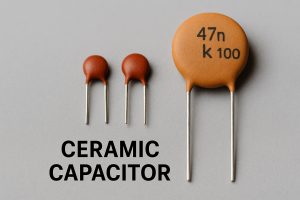
MOVs are the most common and effective varistors used today. Made primarily from zinc oxide granules, MOVs offer fast response times and high surge energy absorption. They are widely used in surge protectors, power supplies, and consumer electronics. MOV varistors are typically disk-shaped and come with two leads or as surface-mount packages.
Silicon Carbide Varistors (SiC Varistors)
Silicon carbide varistors were among the earliest varistor technologies. They require series gaps to limit leakage current because SiC materials have higher standby conduction. Although they are less common today compared to MOVs, SiC varistors offer excellent durability and are suitable for high-temperature and high-voltage applications.
Polymeric Voltage Suppressors
Polymer-based varistors use conductive polymer materials to achieve voltage-dependent resistance. These varistors are smaller and sometimes preferred in compact consumer devices. They offer stable characteristics and good resilience against repetitive surges, making them suitable for microelectronics.
Gas Discharge Tube Varistors (Hybrid Surge Protectors)
While not classical varistors, some hybrid surge protectors combine MOVs with gas discharge tubes to improve surge handling and increase the lifespan of protective circuits. These hybrid VDR systems are used in telecommunication networks and industrial power lines.
Each type of varistor has specific advantages depending on current capacity, response time, voltage level, and environmental conditions.
Varistor Applications
Varistors are essential protective components across numerous sectors due to their fast switching and robust surge-handling capability. One of the most widespread uses of varistors is in surge protection devices (SPDs), including household surge protectors and industrial power modules. These devices frequently experience transient voltage spikes that can damage connected equipment; varistors act as reliable first-line defense.
In consumer electronics, varistors are used in televisions, refrigerators, computers, and LED lighting systems to prevent damage from voltage fluctuations. Power supply units (SMPS) and chargers also employ MOVs to ensure stable operation during line surges.
Telecommunication equipment, such as modems, routers, and communication towers, use varistors to protect against lightning-induced overvoltage. Industrial automation and motor drive systems integrate varistors to protect sensitive control circuits from electrical noise and switching spikes.
Automotive electronics increasingly incorporate varistors for protection against alternator load dumping, ignition noise, and electrostatic discharge. Renewable energy systems, such as solar inverters and wind turbine controllers, also rely on varistors to ensure stable operation in harsh environments.
Materials Used for Varistors
The construction and performance of a varistor depend significantly on the materials used. The most common material is zinc oxide (ZnO), which forms the basis of MOV technology. Zinc oxide particles are mixed with small quantities of metal oxides such as bismuth, cobalt, manganese, and chromium to enhance performance. The mixture is pressed into a ceramic disk and sintered at high temperatures to form a polycrystalline structure.
This structure consists of numerous semiconductor junctions between ZnO grains, providing the nonlinear resistance characteristics essential for surge suppression. Metal electrodes, typically made of silver, nickel, or aluminum, are applied on both sides of the disk, and leads are soldered for circuit connection. The entire assembly is enclosed in an epoxy or plastic coating to protect against moisture, heat, and mechanical stress.
Silicon carbide varistors use SiC crystals, which offer high durability and temperature stability. Though not as common as MOVs today, they are still used in high-energy industrial environments.
Polymeric varistors employ conductive polymer films with embedded carbon-based particles, making them lightweight and flexible. These are mainly used in low-voltage consumer electronics.
The material selection directly influences the varistor’s clamping voltage, energy absorption capacity, operating temperature, and lifespan.
Frequently Asked Questions – FAQs
1. What is a varistor?
A varistor is a voltage-dependent resistor that protects electronic circuits from voltage spikes and transient surges.
2. What does VDR stand for?
VDR stands for Voltage Dependent Resistor, another common term for a varistor.
3. How does a varistor work?
A varistor changes its resistance based on applied voltage. It stays non-conductive at normal voltage and becomes conductive during surges.
4. What is an MOV varistor?
An MOV (Metal Oxide Varistor) is the most common type made from zinc oxide grains and used for surge protection.
5. What is the function of a varistor in a circuit?
Its function is to clamp excessive voltage and divert surge current away from sensitive components.
6. Are varistors polarity sensitive?
No, varistors are non-polar components and can be installed in any orientation.
7. What happens when a varistor fails?
A varistor may short-circuit, burn, or lose its clamping ability after extreme surge events.
8. What is clamping voltage?
Clamping voltage is the maximum voltage a varistor allows before conducting to suppress the surge.
9. Where are varistors used?
Varistors are used in surge protectors, power supplies, home appliances, communication devices, and industrial machinery.
10. What materials are used to make varistors?
Common materials include zinc oxide (ZnO), silicon carbide (SiC), and conductive polymer compounds.
11. What is the response time of a varistor?
Varistors respond within nanoseconds, making them suitable for fast transient suppression.
12. Can varistors protect against lightning?
Yes, varistors can help protect equipment from lightning-induced voltage spikes when used in surge protection systems.
13. Are varistors reusable after a surge?
They can handle multiple surges, but repeated high-energy events can degrade their performance over time.
14. What is the lifespan of a varistor?
The lifespan depends on the number and intensity of surges; MOVs can last many years under normal conditions.
15. Is a varistor the same as a TVS diode?
No. Varistors provide broad surge protection, while TVS diodes offer faster and more precise clamping for sensitive electronics.
So friends, I’m Pralay Bhunia, I hope I’ve been able to help you with this information about Varistor (VDR). If you have any more questions or suggestions, please feel free to share them in the comments. Your support always inspires me to share more new information.
External link:
- Varistor testing Archived 2011-01-05 at the Wayback Machine from Littelfuse company