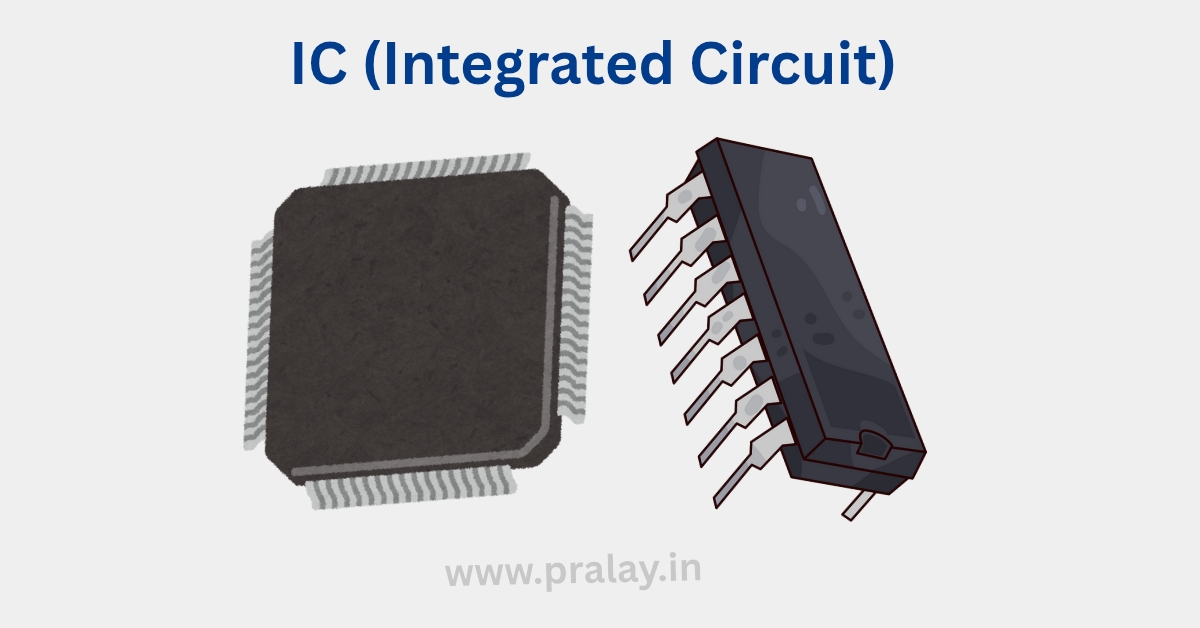
The integrated circuit, often abbreviated as IC, represents one of the most transformative innovations in the history of electronics. Since its invention in 1958 by Jack Kilby at Texas Instruments and later refined by Robert Noyce, the IC has enabled the miniaturization and efficiency of modern devices. According to industry reports, billions of integrated circuits are manufactured each year, powering everything from household gadgets to satellites. Their role is so central that the modern digital age would not exist without them, making the IC the backbone of advanced technology.
Definition of IC (Integrated Circuit)
An integrated circuit is a small semiconductor chip that contains thousands or even millions of interconnected transistors, diodes, capacitors, and resistors. All these components are fabricated onto a single piece of silicon wafer, allowing the IC to perform complex electronic functions within a compact structure. Unlike traditional circuits made from discrete components, ICs are cost-effective, energy-efficient, and highly reliable, making them indispensable in modern electronics.
Types of IC (Integrated Circuit)
Integrated circuits can be broadly categorized based on their functions and applications. They include analog ICs, digital ICs, and mixed-signal ICs. Analog ICs process continuous signals such as audio or radio waves, while digital ICs manage discrete signals in the form of binary data, making them crucial in computers and digital devices. Mixed-signal ICs combine both functionalities, enabling communication systems and advanced processing applications to work seamlessly.
Uses of IC
ICs are used extensively across industries because of their versatility. In consumer electronics, they power smartphones, televisions, and wearable devices. In the automotive sector, ICs control safety systems, navigation, and engine performance. They are also vital in healthcare, where they drive medical devices like pacemakers and diagnostic machines. According to the Semiconductor Industry Association, ICs contributed to global semiconductor sales exceeding $600 billion in 2022, highlighting their unmatched significance.
Functions of IC
The functions of an integrated circuit vary depending on its design. Some ICs serve as memory chips, storing vast amounts of data, while others act as processors, performing billions of calculations per second. ICs can also regulate voltage, amplify signals, and manage timing in electronic systems. Their ability to perform multiple roles within one chip makes them both powerful and efficient.
Related topics
IC (Integrated Circuit) Design
Analog Design
Analog IC design focuses on processing real-world signals such as sound, temperature, or light. These circuits are used in amplifiers, radio receivers, and sensors, ensuring accurate signal conversion and processing.
Digital Design
Digital IC design involves circuits that process binary signals. Examples include microcontrollers, microprocessors, and logic circuits. These ICs form the foundation of computing and digital communication technologies.
Mixed-Signal Design
Mixed-signal ICs combine both analog and digital elements, making them essential for devices like smartphones, GPS systems, and communication networks. Their hybrid nature allows for efficient integration of complex functionalities.
Construction of Integrated Circuits
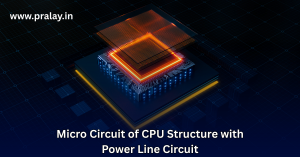
ICs are constructed by layering thin films of semiconductor material on a silicon wafer through photolithography and doping processes. This highly controlled manufacturing allows millions of tiny components to be embedded within a small chip. The finished IC is then encapsulated in protective packaging that enables electrical connections with external devices.
Features of IC (Integrated Circuit)
Integrated circuits are valued for their compact size, high reliability, and cost-effectiveness. They consume less power, occupy minimal space, and offer faster operation compared to discrete circuits. Furthermore, ICs can be mass-produced, ensuring consistency and affordability for widespread technological applications.
Commonly Used IC
Logic Gate ICs
Logic gate ICs form the basic building blocks of digital circuits, performing logical operations like AND, OR, and NOT that are fundamental to computing.
Timer ICs
The 555 timer IC is one of the most widely used, designed for generating precise time delays and oscillations in devices such as alarms, pulse generators, and LED flashers.
Operational Amplifiers
Operational amplifiers, or op-amps, are versatile ICs used in signal processing, filters, and control systems. They are critical in both analog and digital applications.
Voltage Regulators
Voltage regulator ICs provide stable output voltage regardless of fluctuations in input power, ensuring the safe operation of sensitive electronic devices.
Frequently Asked Questions (FAQ) about IC
Q1: What is an integrated circuit in simple terms?
An integrated circuit (IC) is a small electronic component that combines thousands or millions of tiny parts like transistors, resistors, and capacitors onto a single chip of silicon. It performs electronic functions such as processing, amplification, or memory storage within a compact package.
Q2: Who invented the integrated circuit?
The integrated circuit was co-invented in 1958 by Jack Kilby at Texas Instruments and independently by Robert Noyce at Fairchild Semiconductor. Their discoveries laid the foundation for modern electronics.
Q3: What are the main types of integrated circuits?
The three main types of integrated circuits are analog ICs, digital ICs, and mixed-signal ICs. Analog ICs process continuous signals, digital ICs handle binary data, and mixed-signal ICs combine both functions.
Q4: What are integrated circuits used for?
ICs are used in almost every modern electronic device, including smartphones, computers, medical equipment, automobiles, and communication systems. They are essential for data processing, voltage regulation, and signal amplification.
Q5: How are integrated circuits made?
Integrated circuits are manufactured through a process called photolithography, where microscopic layers of semiconductor material are deposited and etched onto a silicon wafer. This allows millions of tiny electronic components to fit on a single chip.
Q6: What are examples of commonly used ICs?
Some widely used ICs include the 555 timer IC, logic gate ICs, operational amplifiers (op-amps), and voltage regulator ICs. These chips are critical in controlling timing, processing signals, and stabilizing power in electronic systems.
Q7: Why are integrated circuits important in technology?
Integrated circuits are important because they enable devices to be smaller, faster, more reliable, and cost-effective. They are the backbone of computing, communication, healthcare, and automation, making modern digital life possible.
So friends, I’m Pralay Bhunia, I hope I’ve been able to help you with this information about ICs. If you have any more questions or suggestions, please feel free to share them in the comments. Your support always inspires me to share more new information.
External link
- Integrated Circuit | IC Definition, Types & Advantages (study.com)