Author: Pralay Bhunia

  • Shaft

    Shaft

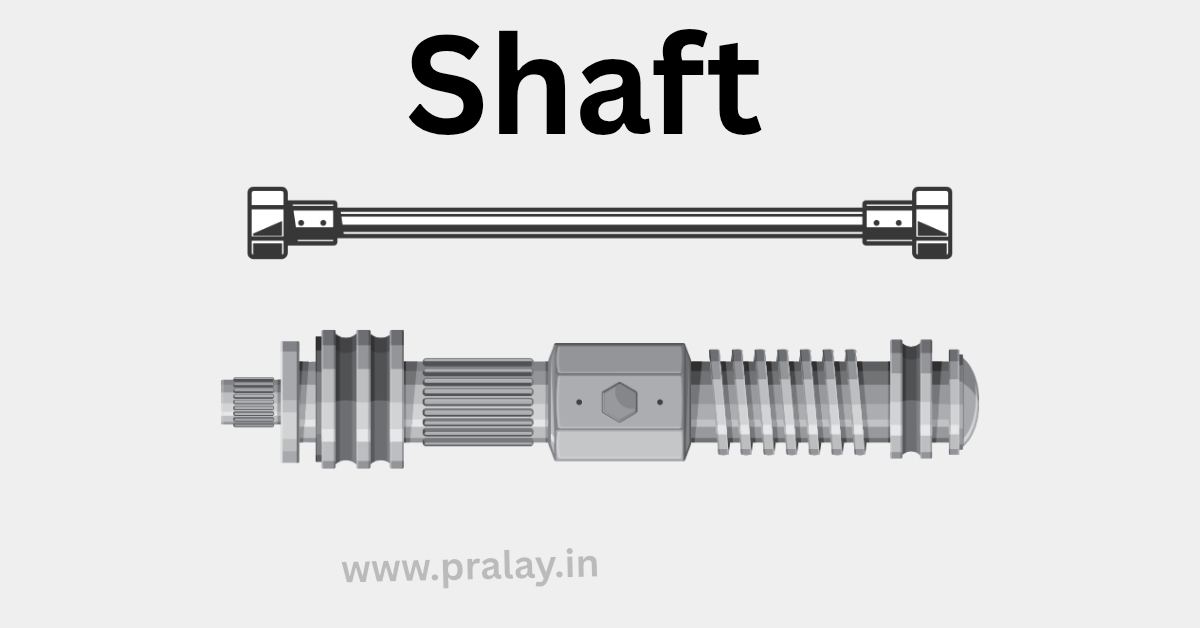
    In the world of mechanical engineering, shafts are one of the most essential machine elements. They are used everywhere—from automobiles and turbines to industrial equipment and power plants. Shafts act as the backbone of power transmission systems, ensuring that torque and rotational motion are efficiently transferred from one machine component to another.

    This article provides a complete guide to shafts, covering their definition, types, materials, functions, and applications. By the end, you’ll have a deep understanding of why shafts are critical in engineering design and how they are applied in real-world industries.

    What is a Shaft?

    A shaft is a rotating machine element, usually cylindrical in shape, that transmits power and rotational motion from a source (like a motor or engine) to other components (such as gears, pulleys, sprockets, or flywheels).

    Shafts are designed to withstand different types of stresses:

    • Torsional stresses from torque transmission.
    • Bending stresses due to loads from gears, pulleys, or belts.
    • Axial loads in certain applications where the shaft also carries thrust.

    Because of these stresses, shafts must be designed with great precision, using strong materials and proper dimensions. A poorly designed shaft can cause misalignment, vibration, excessive wear, or even catastrophic machine failure.

    Types of Shafts

    Types of shaft

    Shafts are classified based on their function, design, and application. The main types include:

    1. Transmission Shafts

    These shafts carry power between a source and a machine component. They do not form part of the machine itself but are essential for transmitting motion. Examples include counter shafts and line shafts used in power transmission systems.

    2. Machine Shafts

    These shafts form an integral part of the machine itself. For example, the crankshaft in an internal combustion engine is a machine shaft because it directly converts reciprocating motion into rotational motion.

    3. Line Shafts

    Line shafts are commonly used in factories and workshops to distribute power from a single source (like a motor) to multiple machines arranged along a line. They often make use of pulleys and belts for power transfer.

    4. Spindles

    Spindles are short shafts that support tools or workpieces. Examples include lathe machine spindles, drill spindles, and milling machine spindles. They are designed for precision and high rotational speeds.

    5. Flexible Shafts

    When alignment between driving and driven parts is not possible, flexible shafts are used. They can transmit power around bends and curves, making them useful in portable tools and medical equipment like endoscopy devices.

    6. Propeller Shafts

    Commonly found in automobiles, ships, and submarines, propeller shafts transmit power from the engine to the wheels or propeller. They are designed to handle high torque and rotational speeds.

    Materials Used for Shafts

    Choosing the right material is crucial for shaft performance. The material must be strong enough to withstand stresses, yet economical for manufacturing.

    Common Materials:

    • Mild Steel: Widely used for general-purpose shafts under light loads.
    • Carbon Steel: Stronger than mild steel, suitable for medium to heavy loads.
    • Alloy Steel: Contains elements like chromium, nickel, or molybdenum to improve toughness, wear resistance, and fatigue strength. Common in automotive and aerospace applications.
    • Stainless Steel: Resistant to corrosion, making it ideal for marine environments and chemical plants.
    • Non-Metallic Materials: In specialized cases, composites, plastics, or fiber-reinforced materials are used where lightweight design or non-conductivity is required.

    The choice of material depends on load conditions, environmental exposure, cost, and expected lifespan.

    Functions of Shafts

    Shafts are not just rotating bars; they perform multiple critical functions in machines.

    1. Power Transmission: The primary role of shafts is to transmit torque from motors or engines to machine components.
    2. Support for Rotating Parts: Shafts hold gears, pulleys, sprockets, bearings, and couplings in position.
    3. Maintaining Alignment: A well-designed shaft ensures smooth power transfer without vibrations or misalignment.
    4. Structural Role: In some machines, shafts form part of the framework, adding rigidity and strength.
    5. Energy Storage: Flywheel shafts can store rotational energy, which is then released when required.

    Applications of Shafts

    Shafts are found across almost every mechanical system imaginable. Their versatility makes them essential in industries such as:

    Automotive Industry

    • Drive Shafts: Transfer torque from the gearbox to the wheels.
    • Crankshafts: Convert reciprocating piston motion into rotational motion in engines.
    • Camshafts: Control valve timing in internal combustion engines.

    Power Generation

    • Turbine Shafts: In hydro, steam, and wind turbines, shafts handle high-speed rotation to drive generators.

    Marine Applications

    • Propeller Shafts: Transmit power from ship engines to propellers, ensuring propulsion in water.

    Aerospace

    • Jet Engine Shafts: Transmit power between compressor, turbine, and fan components in aircraft engines.

    Industrial Machinery

    • Line Shafts: Power multiple machines in workshops and factories.
    • Machine Tool Spindles: Provide precision in milling, drilling, and turning operations.

    Everyday Devices

    Even household appliances like mixers, washing machines, and fans rely on small-scale shafts for smooth operation.

    Design Considerations for Shafts

    When designing a shaft, engineers must balance strength, durability, cost, and performance. Key design factors include:

    • Load Capacity: The shaft must withstand torsional, bending, and axial loads.
    • Material Selection: Chosen based on strength requirements and environmental conditions.
    • Dimensions: Diameter and length directly influence shaft stiffness and performance.
    • Surface Finish: Smooth surfaces reduce stress concentrations and improve fatigue life.
    • Keyways and Splines: Used to connect gears and pulleys securely to shafts.

    Proper design ensures longer service life, reduced vibrations, and efficient power transfer.

    Importance of Shafts in Mechanical Engineering

    Shafts are often called the “spine” of rotating machinery. Without them, power cannot be transmitted effectively, and rotating parts cannot be supported. Their importance lies in:

    • Ensuring reliable machine performance.
    • Allowing energy to be transferred across distances.
    • Reducing the complexity of mechanical systems by acting as a single power-transmission element.
    • Improving machine efficiency and durability.

    Shafts may appear as simple cylindrical elements, but they are among the most vital components in mechanical engineering. From transmitting torque to supporting rotating parts, their functions are indispensable in automobiles, power plants, marine systems, aerospace, and industrial machinery.

    By understanding the definition, types, materials, functions, and applications of shafts, engineers can design systems that are stronger, more efficient, and more reliable. As industries evolve and demand lighter yet stronger materials, shafts will continue to adapt, reinforcing their role as a backbone of modern engineering.

    Frequently Asked Questions (FAQs) About Shafts

    1. What is the definition of a shaft in mechanical engineering?
    A shaft is a rotating cylindrical element designed to transmit power and torque between machine components such as gears, pulleys, and motors.

    2. What are the main types of shafts?
    The common types include transmission shafts, machine shafts, line shafts, spindles, flexible shafts, and propeller shafts. Each type serves a unique purpose in power transmission and machine design.

    3. What materials are commonly used to manufacture shafts?
    Shafts are typically made of mild steel, carbon steel, alloy steel, and stainless steel. In special cases, composites and non-metallic materials are used for lightweight or corrosion-resistant applications.

    4. What is the difference between a transmission shaft and a machine shaft?
    Transmission shafts transfer power between sources and working parts (like countershafts in gearboxes), while machine shafts are integral parts of the machine itself (like crankshafts in engines).

    5. Why is material selection important for shafts?
    The material must withstand stresses such as torsion, bending, and fatigue. Choosing the right material ensures strength, durability, corrosion resistance, and cost-effectiveness.

    6. What are the main functions of shafts?
    Shafts transmit power, support rotating elements, maintain alignment, act as structural parts in machines, and sometimes store rotational energy.

    7. Where are shafts used in everyday life?
    Shafts are found in vehicles (drive shafts, crankshafts), household appliances (mixers, washing machines, fans), power plants, marine systems, Electric motor and industrial machinery.

    8. What is a flexible shaft and where is it used?
    A flexible shaft is designed to transmit rotary motion around bends and misaligned parts. It is widely used in portable tools, dental equipment, and medical devices like endoscopes.

    9. What stresses act on a shaft during operation?
    Shafts are subjected to torsional stresses (from torque), bending stresses (from loads of gears and pulleys), and axial stresses (in thrust applications).

    10. What is the difference between a shaft and an axle?
    A shaft transmits torque and power, while an axle primarily supports rotating parts like wheels without transmitting torque.

    So friends, I’m Pralay Bhunia, I hope I’ve been able to help you with this information about Mechanical Shafts. If you have any more questions or suggestions, please feel free to share them in the comments. Your support always inspires me to share more new information.

    External link

  • Diode

    Diode

    Learn what a diode is, its working principle, types, characteristics, advantages, and real-life uses. Complete beginner-friendly guide with examples.

     What is a Diode?

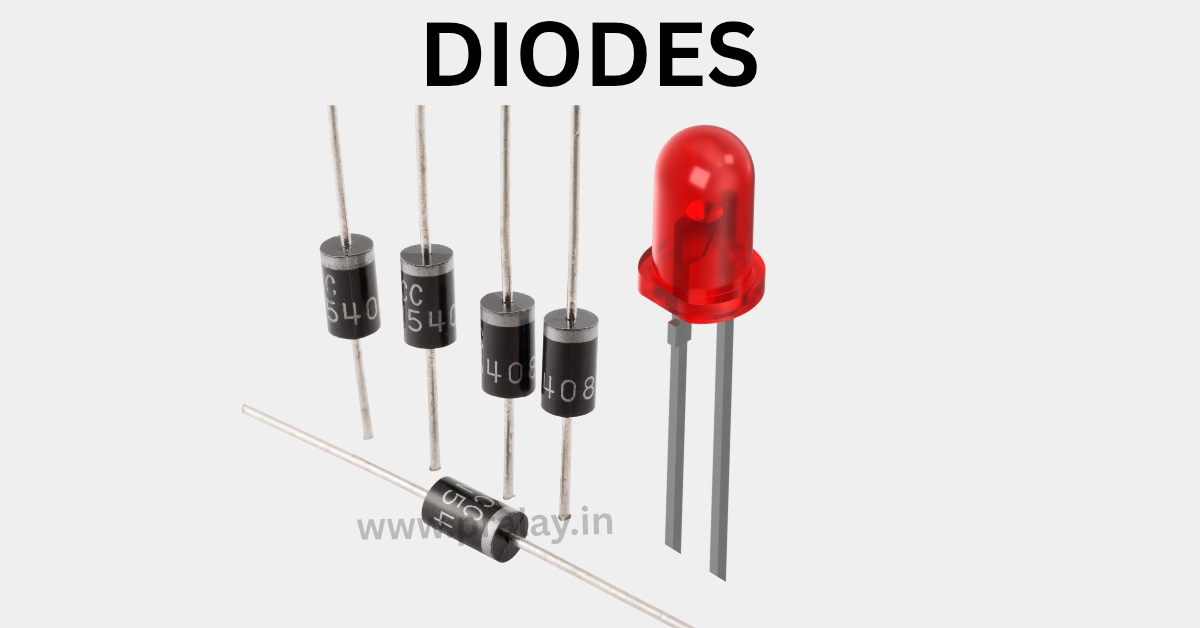
    A diode is one of the most important semiconductor devices used in electronics. It is designed to allow electric current to flow in only one direction while blocking it in the opposite direction. This unique behavior makes it extremely useful in controlling and directing electrical signals in a circuit.

    A diode is made using a PN junction, which is formed by joining two types of semiconductor materials known as P-type and N-type. When these two materials are combined, they create a junction that controls how current flows through the device. Because of this structure, a diode acts like a one-way valve for electricity.

    Working Principle of Diode

    The working principle of a diode is based on how it behaves under different voltage conditions. When a voltage is applied in such a way that the positive side is connected to the P-type region and the negative side to the N-type region, the diode allows current to pass. This condition is known as forward bias.

    On the other hand, when the voltage is applied in the opposite direction, the diode blocks the flow of current. This is called reverse bias. In this state, only a very small leakage current may flow, but it is almost negligible. This ability to allow current in one direction and block it in the other is what makes diodes essential in electronic circuits.

    Diode Symbol and Structure

    Diode symbol images

    A diode has two terminals:

    • Anode (+) → where current enters
    • Cathode (-) → where current exits

    Types of Diodes

    There are several types of diodes, and each type is designed for a specific purpose in electronics. One of the most common types is the rectifier diode, which is used in power supply circuits to convert alternating current into direct current. This process is essential for powering electronic devices that require stable DC voltage.

    Another important type is the Zener diode, which is used for voltage regulation. It helps maintain a constant voltage level in a circuit, protecting components from voltage fluctuations. Light Emitting Diodes, commonly known as LEDs, are widely used in lighting and display technologies. They emit light when current passes through them, making them energy-efficient and popular in modern electronics.

    Photodiodes are used to detect light and convert it into electrical signals. These are commonly found in sensors and communication devices. There are also Schottky diodes, which are known for their fast switching speed and low voltage drop, making them useful in high-speed applications.

    There are several types of diodes, each designed for specific applications:

    1. Rectifier Diode

    Used to convert AC (alternating current) into DC (direct current).

    2. Zener Diode

    Used for voltage regulation and protection.

    3. Light Emitting Diode (LED)

    Used for lighting and display systems.

    4. Photodiode

    Used to detect light and convert it into electrical signals.

    5. Schottky Diode

    Known for fast switching and low voltage drop.

    Characteristics of a Diode

    The behavior of a diode can be understood by studying its voltage-current characteristics. When a diode is forward biased and the applied voltage exceeds a certain threshold, the current increases rapidly. This allows efficient conduction of electricity.

    In reverse bias, the current remains extremely low, which shows the diode’s ability to block unwanted current flow. This characteristic is particularly useful in circuits where controlling the direction of current is important.

    Applications of Diode

    Diodes are used in a wide range of applications in everyday life. They play a crucial role in power supply systems by converting AC to DC, which is required by most electronic devices. Mobile chargers, televisions, radios, and computers all use diodes as part of their internal circuits.

    In addition to power conversion, diodes are also used in signal processing, voltage regulation, and protection circuits. LEDs, which are a type of diode, are used in lighting systems, display panels, and indicators. Solar panels also use diodes to manage the flow of electricity and prevent reverse current.

    Type Application
    Rectifier Diode Power supply circuits
    Zener Diode Voltage regulation
    LED Lighting & displays
    Photodiode Light sensors
    Schottky Diode High-speed circuits

    Real-Life Example of Diode

    A simple example of a diode in action can be seen in a mobile phone charger. When you plug the charger into a power outlet, the incoming AC voltage is converted into DC voltage using diodes. This DC power is then used to charge your phone safely and efficiently.

    FAQ

    What is a diode used for?
    A diode is used to control the direction of current and is commonly used in rectification, signal processing, and protection circuits.

    Why does a diode allow current in one direction?
    Because of its PN junction structure, it creates a barrier that allows current to pass only in forward bias and blocks it in reverse bias.

    What are the main types of diodes?
    Some common types include rectifier diodes, Zener diodes, LEDs, photodiodes, and Schottky diodes.

    What is forward bias in a diode?
    Forward bias is the condition in which the diode allows current to flow by applying voltage in the correct direction.

    Conclusion

    A diode is a fundamental component in electronics that plays a vital role in controlling the flow of current. Its simple yet powerful working principle makes it essential for a wide range of applications, from basic circuits to advanced electronic systems. By understanding how a diode works and where it is used, you can build a strong foundation in electronics and better understand modern technology.

    Read also: –

    1. Semiconductor
    2. Transistor
    3. Integrated circuit 

    So friends, I’m Pralay Bhunia, I hope I’ve been able to help you with this information about Diode. If you have any more questions or suggestions, please feel free to share them in the comments. Your support always inspires me to share more new information.

    External link

  • Capacitor

    Capacitor

    Capacitors are one of the most essential passive components in electrical and electronic circuits. They play a crucial role in storing and releasing energy, filtering signals, stabilizing voltage, and enabling countless applications across industries. Whether you are a student, hobbyist, or professional, understanding capacitors is vital for working with modern technology.

    What is a Capacitor?

    Definition:capacitor is an electronic component that stores electrical energy in an electric field. It consists of two conductive plates separated by an insulating material called the dielectric. When a voltage is applied across the plates, an electric charge accumulates, allowing the capacitor to store and release energy when needed.

    The ability of a capacitor to store charge is called capacitance, measured in farads (F). Since one farad is very large, practical capacitors are often in microfarads (µF), nanofarads (nF), or picofarads (pF).

    Capacitor Symbol

    In circuit diagrams, capacitors are represented by standardized symbols:

    • Non-polarized Capacitor: Two parallel lines.
    • Polarized Capacitor (Electrolytic): One straight line and one curved line, indicating polarity.

    “Electrical circuit symbol of a capacitor (polarized and non-polarized)

    Types of Capacitors

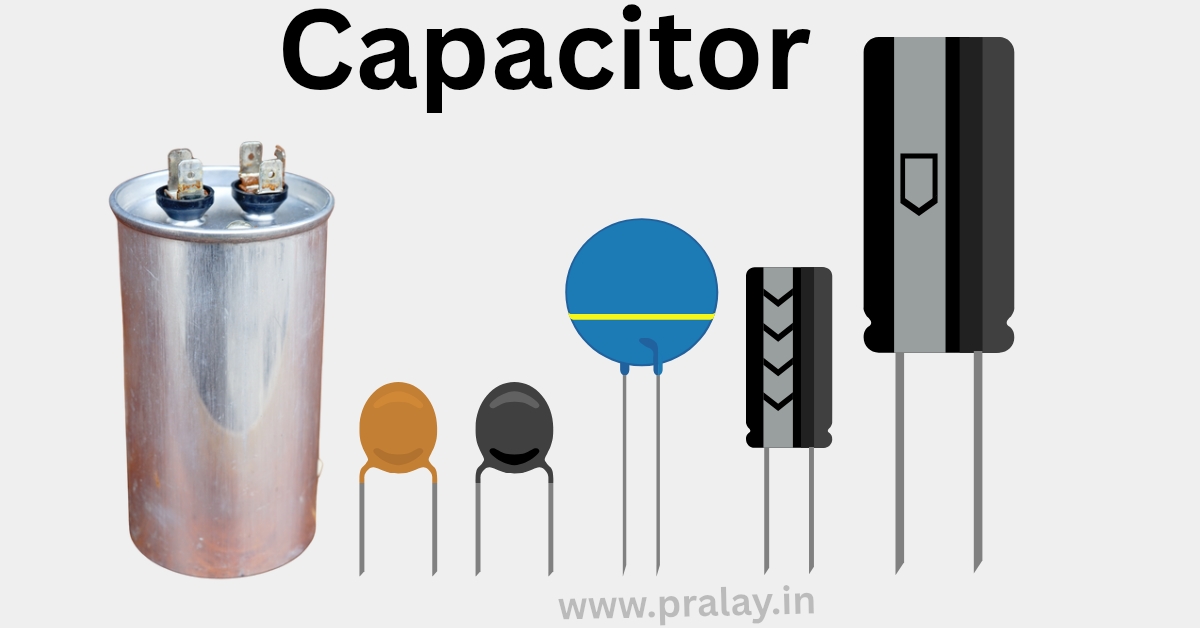
    Capacitors come in various types based on their dielectric material, construction, and usage. Some common types include:

    There are two major categories of capacitors, and under them many specific types:

    Main Categories

    Category Description
    1. Fixed Capacitors Have a constant value of capacitance (most common in electronics).
    2. Variable Capacitors Capacitance can be adjusted (used in tuning circuits like radios).

    Types of Fixed Capacitors

    These are the most widely used:

    Type Key Features Common Uses
    Ceramic Small, cheap, non-polar Decoupling, filtering
    Electrolytic (Aluminum/Tantalum) High capacitance, polarized Power supplies, smoothing
    Film Capacitors Good stability and low loss Audio, high-frequency circuits
    Mica Capacitors High precision & reliability RF circuits
    Paper Capacitors Older type, rarely used now High voltage circuits (historically)
    Polymer Capacitors Low ESR, long life High-performance power electronics
    Supercapacitors Extremely high capacitance Energy storage, backup power

    Types of Variable Capacitors

    Type Description Use
    Tuning Capacitor Rotating plates vary capacitance Radio tuning
    Trimmer Capacitor Small adjustable capacitor Fine calibration

    Capacitor Color Code

    Some capacitors (especially older ceramic disc types) use color codes to represent values. The code works like resistor color bands.

    Color Digit Multiplier (pF) Tolerance
    Black 0 ×1
    Brown 1 ×10 ±1%
    Red 2 ×100 ±2%
    Orange 3 ×1,000
    Yellow 4 ×10,000
    Green 5 ×100,000 ±0.5%
    Blue 6 ×1,000,000 ±0.25%
    Violet 7 ×10,000,000 ±0.1%
    Gray 8 ×100,000,000 ±0.05%
    White 9 ×1,000,000,000
    Gold ×0.1 ±5%
    Silver ×0.01 ±10%
    None ±20%

    Example:

    • Brown (1), Black (0), Orange (×1000 pF) → 10,000 pF = 0.01 µF

    Modern capacitors usually have their values printed directly instead of using color codes.

    Capacitor in Circuit

    Capacitors can be connected in two main ways:

    1. Series Connection

    • Total capacitance decreases.
    • Formula: [latex] \frac{1}{C_{total}} = \frac{1}{C_1} + \frac{1}{C_2} + \frac{1}{C_3} + \cdots [/latex]

    2. Parallel Connection

    • Total capacitance increases.
    • Formula: [latex] C_{total} = C_1 + C_2 + C_3 + \cdots [/latex]

    Applications of Capacitors

    Capacitors are widely used in electronics and electrical engineering. Some key applications include:

    1. Energy Storage – Store and release energy in power supplies.
    2. Filtering – Remove unwanted frequencies in power lines or signals.
    3. Coupling & Decoupling – Pass AC signals while blocking DC, or stabilize voltage.
    4. Timing Circuits – Used with resistors to create delays (RC circuits).
    5. Signal Processing – Audio systems, radio tuning, oscillators.
    6. Motor Starters – Provide phase shift for induction motors.
    7. Power Factor Correction – Improve efficiency in electrical distribution.
    8. Supercapacitors in Renewable Energy – Store energy for solar, wind, and backup systems.

    Frequently Asked Questions (FAQ) about Capacitors

    Q1. What is the main function of a capacitor?
    A capacitor stores electrical energy in an electric field and releases it when needed. It is mainly used for energy storage, filtering, and signal coupling/decoupling.

    Q2. What is the unit of capacitance?
    The unit of capacitance is the farad (F). In practical use, capacitors are usually measured in microfarads (µF), nanofarads (nF), or picofarads (pF).

    Q3. How do you identify capacitor polarity?

    • Electrolytic capacitors are polarized. The negative lead is usually marked with a stripe.
    • Non-polarized capacitors (like ceramic or film) can be connected in any direction.

    Q4. What happens if a capacitor is connected with wrong polarity?
    In polarized capacitors (like electrolytic or tantalum), reversing polarity can cause leakage, overheating, or even an explosion.

    Q5. What is the difference between series and parallel connection of capacitors?

    • In series, total capacitance decreases.
    • In parallel, total capacitance increases.

    Q6. Where are capacitors commonly used?
    Capacitors are used in power supplies, filters, motor starters, radios, audio systems, renewable energy storage, and timing circuits.

    Q7. What is a supercapacitor?
    A supercapacitor (or ultracapacitor) is a type of capacitor that stores a much larger amount of energy compared to regular capacitors. It is often used in backup power, electric vehicles, and renewable energy systems.

    So friends, I’m Pralay Bhunia, I hope I’ve been able to help you with this information about Resistor. If you have any more questions or suggestions, please feel free to share them in the comments. Your support always inspires me to share more new information.

    Externall links:

  • Resistor

    Resistor

    Introduction: A resistor is one of the most fundamental and widely used components in electrical and electronic circuits. As the name suggests, it “resists” the flow of electric current by converting electrical energy into heat. Resistors play a critical role in controlling voltage, current, and signal levels, thereby ensuring safe and efficient circuit operation.

    Definition of Resistor

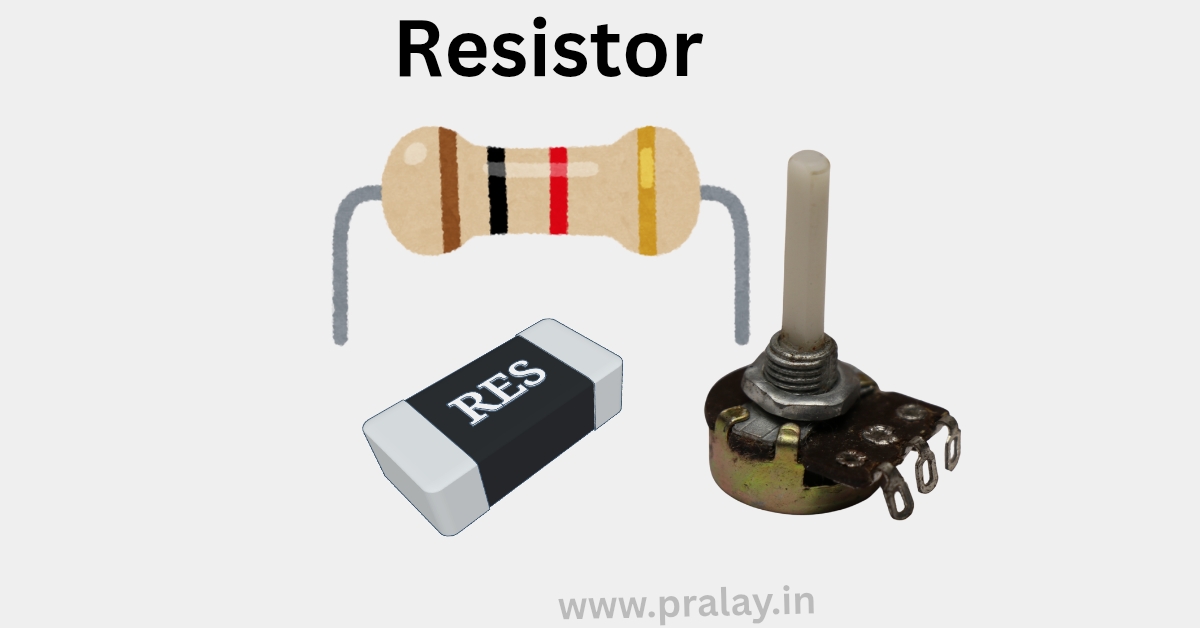
    A resistor is a passive two-terminal electronic component that opposes the flow of current, creating a voltage drop across its terminals. The opposition offered by a resistor is known as resistance, measured in ohms (Ω).

    The relationship between voltage (V), current (I), and resistance (R) is given by Ohm’s Law:

    V=I×R

    Symbol of Resistor

    Resistor symbol

    In circuit diagrams, resistors are represented using standard symbols:

    • IEEE Symbol (zigzag line): Common in the United States.
    • IEC Symbol (rectangular box): Widely used internationally.
    • Textual Symbols: The primary textual symbol for a fixed resistor in schematics is the letter R. 

    Types of Resistors

    Resistors can be broadly categorized based on their construction, behavior, and application:

    1. Fixed Resistors

    These resistors have a constant resistance value.

    • Carbon Composition Resistor – Low cost, general purpose.
    • Carbon Film Resistor – Stable and accurate for moderate applications.
    • Metal Film Resistor – High accuracy, low noise, better stability.
    • Wire-Wound Resistor – High power handling, used in power circuits.

    2. Variable Resistors

    Allow adjustment of resistance manually.

    • Potentiometer (POT): Three-terminal device used for voltage division.
    • Rheostat: Two-terminal device used for current control.
    • Trimmer: Small adjustable resistor used in calibration.

    3. Special Resistors

    • Thermistors: Temperature-dependent resistors (NTC and PTC).
    • Photoresistors (LDRs): Light-sensitive resistors.
    • Varistors (VDRs): Voltage-dependent resistors for surge protection.

    Resistor Color Code

    Resistors are usually marked with colored bands that indicate their resistance value and tolerance. The color code system uses standardized color bands:

    • First Band: First digit of resistance.
    • Second Band: Second digit.
    • Third Band: Multiplier.
    • Fourth Band: Tolerance.


    Color Digit Multiplier Tolerance
    Black 0 ×100
    Brown 1 ×101 ±1%
    Red 2 ×10² ±2%
    Orange 3 ×10³
    Yellow 4 ×10⁴
    Green 5 ×10⁵ ±0.5%
    Blue 6 ×10⁶ ±0.25%
    Violet 7 ×10⁷ ±0.1%
    Gray 8 ×10⁸ ±0.05%
    White 9 ×10⁹
    Gold ×10-1 ±5%
    Silver ×10-2 ±10%
    None ±20%

    Example:

    • Brown (1), Black (0), Red (×100), Gold (±5%) → 1,000 Ω (1 kΩ ±5%).

    Resistors in Circuits

    Resistors are connected in circuits in different configurations to achieve desired voltage and current levels:

    Series Connection: Resistance adds up.

    [latex]R_{total} = R_1 + R_2 + R_3 + \dots[/latex]

    Parallel Connection: Reciprocal sum of resistance.

    [latex]\frac{1}{R_{total}} = \frac{1}{R_1} + \frac{1}{R_2} + \frac{1}{R_3} + \dots[/latex]

    Series-Parallel Networks: Combination of both for complex circuits.

    Applications of Resistors

    Resistors are indispensable in electrical and electronic applications:

    • Voltage Division: Used in potential dividers.
    • Current Limiting: Protect LEDs, transistors, and ICs from excess current.
    • Biasing: Establish correct operating points in transistors.
    • Signal Conditioning: Filtering and shaping signals in communication systems.
    • Heat Generation: Employed in heaters and load testing.
    • Pull-up and Pull-down: Ensure defined logic levels in digital circuits.

    Here’s a FAQ section you can add to the article for better clarity and completeness:

    Frequently Asked Questions (FAQ) About Resistors

    Q1. What is the function of a resistor in a circuit?
    A resistor controls the flow of electric current by providing resistance. It helps regulate voltage, limit current, and protect sensitive components.

    Q2. How is resistance measured?
    Resistance is measured in ohms (Ω) using an instrument called an ohmmeter or a multimeter.

    Q3. What happens if a resistor is not used in a circuit?
    Without resistors, excessive current may flow, which can damage electronic components such as LEDs, transistors, or integrated circuits.

    Q4. What is the difference between fixed and variable resistors?

    • Fixed resistor: Has a constant resistance value that cannot be changed.
    • Variable resistor: Allows manual adjustment of resistance to control current or voltage.

    Q5. What is tolerance in resistors?
    Tolerance indicates the accuracy of the resistor’s value. For example, a 100 Ω resistor with ±5% tolerance may have an actual resistance between 95 Ω and 105 Ω.

    Q6. What is the difference between series and parallel resistor connections?

    • Series connection: Total resistance increases (sum of all resistors).
    • Parallel connection: Total resistance decreases (reciprocal of the sum of reciprocals).

    Q7. How do I read the resistor color code?
    Each color represents a number. The first two (or three) bands give digits, the next band gives a multiplier, and the last band shows tolerance.

    Q8. Can resistors generate heat?
    Yes. When current flows through a resistor, electrical energy is converted into heat due to resistance. High-power resistors are specifically designed to dissipate heat safely.

    Q9. What is a pull-up or pull-down resistor?

    • Pull-up resistor: Connects to the positive supply to ensure a logic “1” when the switch is open.
    • Pull-down resistor: Connects to ground to ensure a logic “0” when the switch is open.

    Q10. Where are resistors commonly used?
    Resistors are used in power supplies, LED circuits, amplifiers, communication systems, computers, and almost every electronic device.

    So friends, I’m Pralay Bhunia, I hope I’ve been able to help you with this information about Resistor. If you have any more questions or suggestions, please feel free to share them in the comments. Your support always inspires me to share more new information.

    External link:

  • Electric Generator

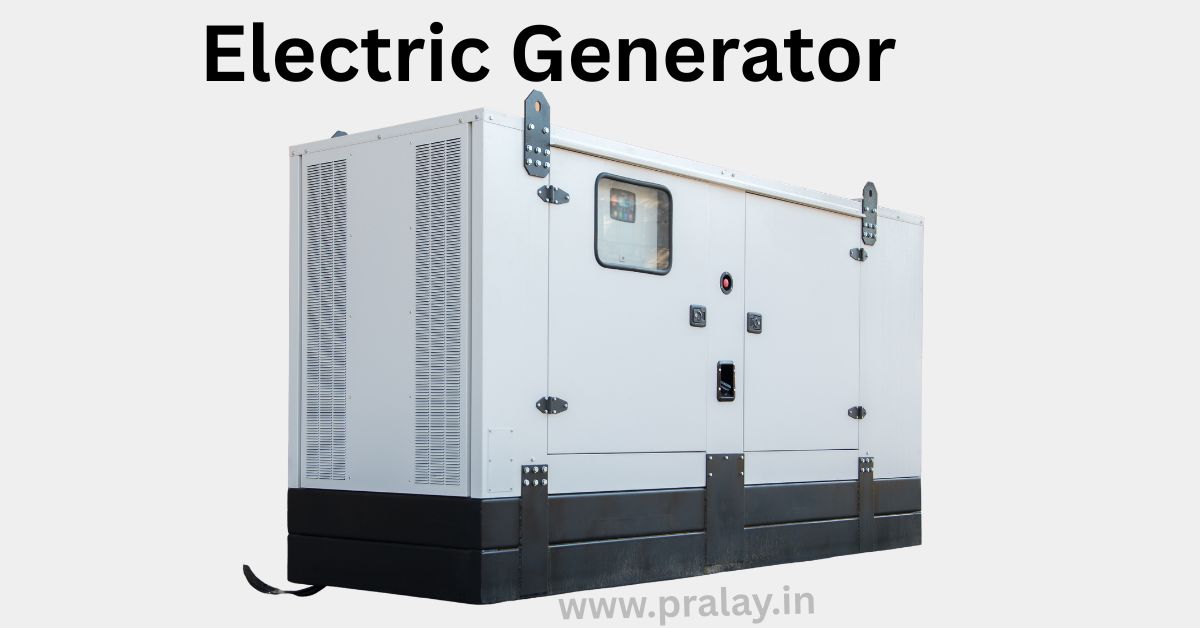
    Electric Generator

    Introduction: Electricity has become the backbone of modern civilization, powering industries, households, hospitals, and transport systems. Behind this constant supply of electrical energy lies one of the most significant inventions in human history the electric generator. An electric generator is an essential device that converts mechanical energy into electrical energy, ensuring an uninterrupted power supply in both small-scale and large-scale applications. From backup systems in homes to massive power stations, generators play a vital role in sustaining daily life and economic activities.

    Definition of Electric Generator

    An electric generator is a machine that transforms mechanical energy—obtained from sources such as steam turbines, water turbines, internal combustion engines, or wind turbines—into electrical energy. This conversion is based on the principle of electromagnetic induction, discovered by Michael Faraday in 1831. According to Faraday’s law, whenever a conductor moves through a magnetic field, an electromotive force (EMF) is induced, which generates electricity.

    Working Principle of Electric Generator

    The working of an electric generator is fundamentally based on Faraday’s Law of Electromagnetic Induction.

    1. A conductor (usually copper wire) is mechanically rotated within a magnetic field.

    2. As the conductor cuts across the magnetic lines of force, an EMF is induced.

    3. This induced EMF drives the flow of electrons, thereby producing an electric current.

    Electric Generator symbol

    Electric Generator symbol
    Electric Generator symbol

    Major Components of an electric generator:

    • Rotor/Armature: The rotating coil where EMF is induced.

    • Stator: The stationary part that provides the magnetic field.

    • Prime Mover: A mechanical source (such as a turbine or engine) that provides the necessary rotational motion.

    • Slip Rings and Brushes: Facilitate the transfer of current in AC generators.

    • Commutator: Used in DC generators to convert alternating EMF into direct current.

    Types of Electric Generators

    Electric generators can be broadly categorized into the following types:

    1. Based on Current Output

    • Direct Current (DC) Generators: Produce unidirectional current. Commonly used in battery charging, electroplating, and small power supply applications.

    • Alternating Current (AC) Generators (Alternators): Produce alternating current, widely used in power stations and modern electrical systems.

    2. Based on Energy Source

    • Hydroelectric Generators: Driven by water turbines in dams.

    • Thermal Generators: Use steam turbines powered by coal, natural gas, or nuclear energy.

    • Wind Generators: Powered by wind turbines to generate renewable energy.

    • Diesel Generators: Use internal combustion engines, widely used for backup power supply.

    3. Based on Size and Application

    • Portable Generators: Small, mobile, and often used for temporary power supply.

    • Industrial Generators: Large-scale machines capable of supplying electricity to factories, hospitals, and data centers.

    Applications of Electric Generators

    • Power Plants: Primary electricity generation for cities and industries.

    • Backup Power: Emergency power supply for homes, hospitals, and commercial facilities.

    • Construction Sites: Temporary energy supply where grid power is unavailable.

    • Renewable Energy Systems: Harnessing wind, water, and solar power for sustainable electricity.

    Frequently Asked Questions (FAQ)

    Q1. What is the main purpose of an electric generator?

    The main purpose of an electric generator is to convert mechanical energy into electrical energy for powering devices, machinery, and systems.

    Q2. Who invented the electric generator?

    The principle of the electric generator was discovered by Michael Faraday in 1831, when he demonstrated electromagnetic induction.

    Q3. What is the difference between an alternator and a generator?

    An alternator produces alternating current (AC), while a DC generator produces direct current (DC). In common usage, “generator” often refers to both types, but alternators are widely used in power stations.

    Q4. Which fuel sources can drive a generator?

    Generators can be powered by diesel, natural gas, steam (from coal, nuclear, or geothermal energy), wind, water, and even solar in hybrid systems.

    Q5. What is the efficiency of an electric generator?

    Typical efficiency ranges from 85% to 95%, depending on design, size, and operating conditions.

    Q6. Can a generator run continuously?

    Yes, but continuous operation requires proper cooling, lubrication, and maintenance. Industrial generators can run 24/7, while portable generators are usually designed for shorter operating periods.

    Q7. What is the difference between a generator and a motor?

    A generator converts mechanical energy into electrical energy, whereas a motor does the reverse by converting electrical energy into mechanical energy.

    Q8. What are some common applications of generators?

    • Power plants (electricity generation)

    • Hospitals (emergency backup)

    • Data centers (uninterrupted supply)

    • Remote locations (off-grid power)

    • Construction sites (temporary energy)

    Q9. Are generators environmentally friendly?

    Traditional fuel-based generators produce emissions, but renewable-energy-driven generators (like wind and hydro) are environmentally friendly and sustainable.

    Q10. How do I choose the right generator for my needs?

    Consider power requirements (kW/kVA), type of load, fuel availability, portability, runtime, and budget before selecting a generator.

    So friends, I’m Pralay Bhunia, I hope I’ve been able to help you with this information about Electric Generator. If you have any more questions or suggestions, please feel free to share them in the comments. Your support always inspires me to share more new information.

    External link:

    BYJU’S: History of Electric Generators

  • Electric Motor

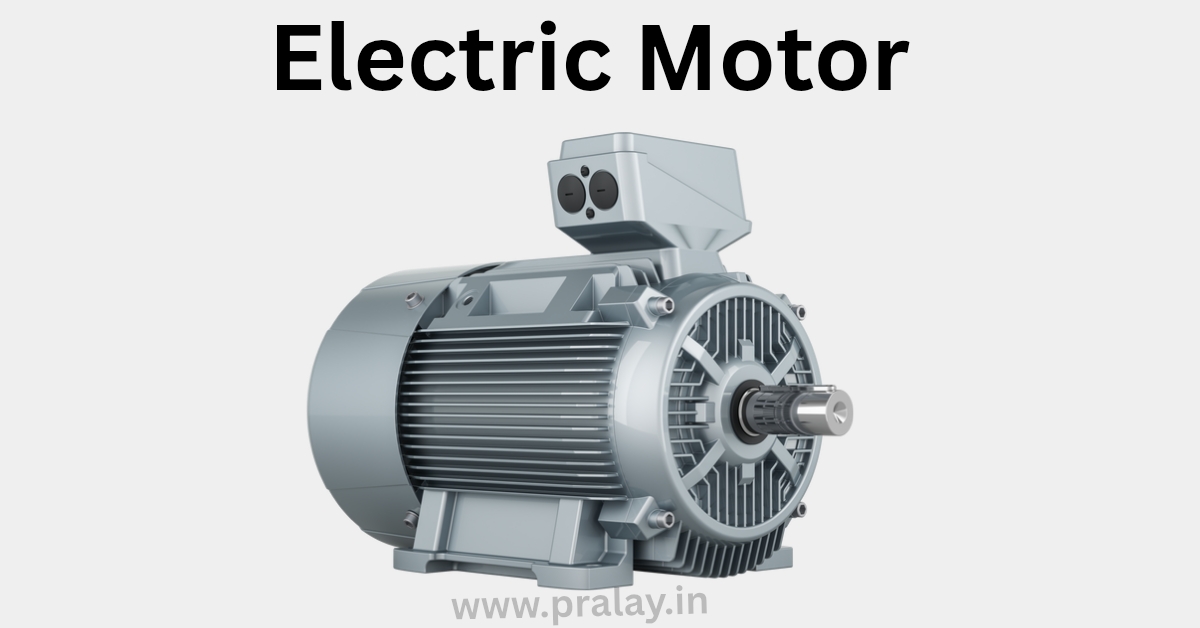
    Electric Motor

    Introduction: Electric motors are fundamental components of modern industry and daily life, powering a vast range of devices from household appliances to industrial machinery and electric vehicles. They play a crucial role in converting electrical energy into mechanical energy, making them indispensable in applications where movement, torque, or mechanical work is required. With the global shift toward electrification and sustainability, electric motors are increasingly central to energy-efficient technologies.

    Definition of Electric Motor

    An electric motor is an electromechanical device that converts electrical energy into mechanical energy by utilizing the interaction between magnetic fields and current-carrying conductors. This conversion is based on electromagnetic principles, particularly Faraday’s Law of Electromagnetic Induction and Lorentz Force.

    Working Principle of  Electric Motor

    The working principle of an electric motor is grounded in electromagnetism. When an electric current passes through a conductor placed in a magnetic field, it experiences a mechanical force. This is expressed by Fleming’s Left-Hand Rule, which states that if the thumb, forefinger, and middle finger of the left hand are held mutually perpendicular, with the forefinger representing the magnetic field and the middle finger the current, then the thumb points in the direction of motion (force).

    In simple terms, the electric current in the motor’s windings creates a magnetic field. This field interacts with the external magnetic field of the stator (or permanent magnets). The interaction produces torque, causing the rotor to rotate.

    Electric Motor symbol

    Electric Motor symbol
    Electric Motor symbol

    Major Components of an Electric Motor

    1. Stator – The stationary part that generates a magnetic field.

    2. Rotor – The rotating part that turns due to electromagnetic forces.

    3. Commutator (in DC motors) – Helps reverse the direction of current to maintain unidirectional torque.

    4. Windings – Conductors wound into coils to carry current.

    5. Bearings & Shaft – Provide support and transmit rotational motion.

    Types of Electric Motors

    Electric motors can be classified broadly into two categories:

    1. Direct Current (DC) Motors

    Series DC Motor – High starting torque, commonly used in cranes, hoists, and traction.

    Shunt DC Motor – Constant speed, used in fans, blowers, and conveyors.

    Compound DC Motor – Combines series and shunt characteristics, suitable for presses and elevators.

    2. Alternating Current (AC) Motors

    Induction Motor (Asynchronous Motor)

    Single-phase Induction Motor: Used in household appliances.

    Three-phase Induction Motor: Widely used in industries for pumps, compressors, and conveyors.

    Synchronous Motor – Runs at synchronous speed, used in power factor correction and large-scale industrial drives.

    3. Special Motors

    Stepper Motor – Moves in discrete steps, ideal for robotics and CNC machines.

    Servo Motor – Provides precise control of position and speed, used in automation and robotics.

    Brushless DC Motor (BLDC) – High efficiency and reliability, commonly used in electric vehicles and drones.

    Applications of Electric Motors

    Domestic appliances: Fans, refrigerators, washing machines.

    Industrial machinery: Pumps, compressors, conveyors, and lathes.

    Transportation: Electric vehicles, trains, and ships.

    Automation and robotics: Servo and stepper motors for precision control.

    Energy sector: Wind turbines and power plants.

    FAQ about Electric Motors:

    1. What is the main function of an electric motor?

    The main function of an electric motor is to convert electrical energy into mechanical energy, which can then be used to perform mechanical work such as rotation, lifting, or driving machines.

    2. What are the most common types of electric motors?

    The most common types are DC motors, AC induction motors, synchronous motors, stepper motors, servo motors, and brushless DC motors (BLDCs).

    3. What is the difference between an AC motor and a DC motor?

    AC Motor runs on alternating current, is widely used in industry, and is generally more robust and low-maintenance.

    DC Motor runs on direct current, provides high starting torque, and is often used in applications requiring variable speed control.

    4. Where are electric motors used in daily life?

    Electric motors are found in fans, washing machines, refrigerators, air conditioners, electric vehicles, pumps, elevators, and countless industrial machines.

    5. Why are induction motors so widely used?

    Induction motors are durable, efficient, low-cost, and require little maintenance, making them the preferred choice in industrial and household applications.

    6. What is the working principle of an electric motor in simple words?

    When electricity flows through a coil inside a magnetic field, it produces a force that makes the coil (and the attached rotor) rotate, converting electricity into motion.

    7. What is the role of a commutator in a DC motor?

    The commutator reverses the current direction in the windings to maintain continuous rotation and unidirectional torque.

    8. Which motor is used in electric vehicles (EVs)?

    Electric vehicles commonly use Brushless DC Motors (BLDCs) or AC induction motors because of their high efficiency, reliability, and precise control.

    9. What is the efficiency of electric motors?

    Most modern electric motors operate at 85–97% efficiency, depending on design, load, and operating conditions.

    10. What is the future of electric motors?

    The future points toward smart, energy-efficient, and compact motors, driven by the needs of electric mobility, renewable energy systems, and automation.

    So friends, I’m Pralay Bhunia, I hope I’ve been able to help you with this information about Electric Motor. If you have any more questions or suggestions, please feel free to share them in the comments. Your support always inspires me to share more new information.

    External link:

  • Transformer

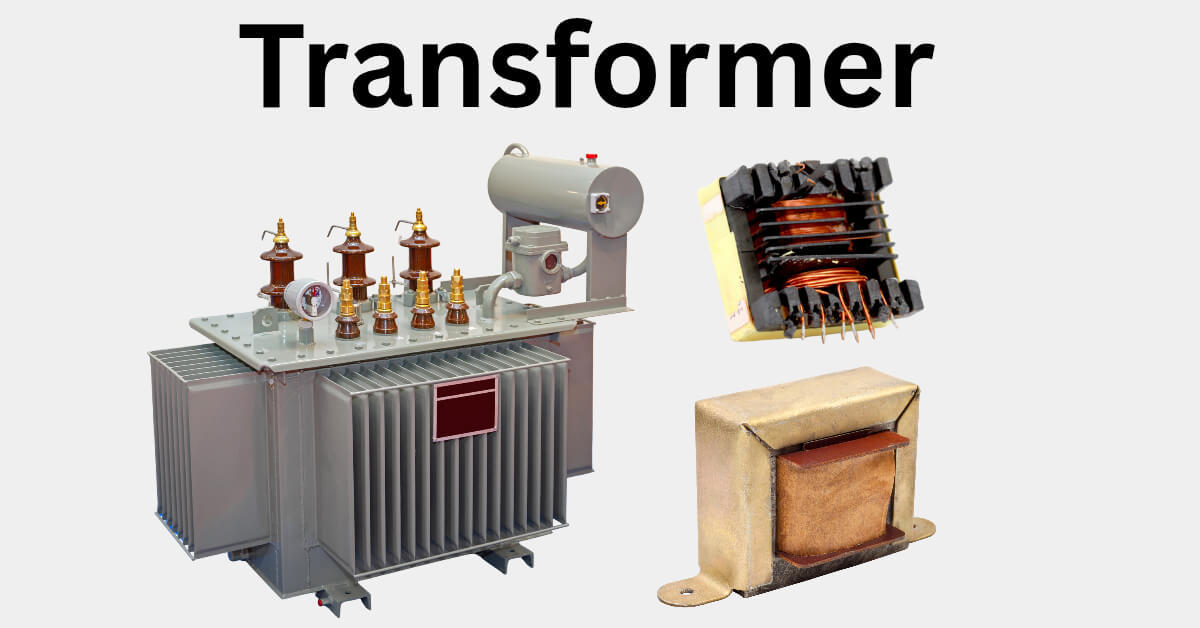
    Transformer

    Introduction: Electrical power systems are the backbone of modern civilization, delivering electricity across vast distances to homes, industries, and commercial establishments. One of the most critical components that makes this possible is the transformer. Widely used in power generation, transmission, and distribution networks, transformers enable the efficient transfer of electrical energy by adjusting voltage levels without changing frequency.

    What is a transformer?

    Definition of Transformer: A transformer is a static electrical machine that transfers alternating current (AC) electrical power from one circuit to another through the principle of electromagnetic induction. It increases (step-up) or decreases (step-down) the voltage while maintaining the same power (neglecting losses). The frequency of the electrical signal remains unchanged.

    In simple terms:

    • If the voltage is stepped up, the current decreases proportionally.
    • If the voltage is stepped down, the current increases proportionally.
    • This makes transformers essential for minimizing power losses during long-distance transmission and for delivering safe voltages to end users.

    What is the transformer principle?

    The operation of a transformer is based on Faraday’s Law of Electromagnetic Induction, which states that a changing magnetic flux in a coil induces an electromotive force (EMF) in a nearby coil.

    Working Principle of Transformer

    1. An alternating current flows through the primary winding, creating a time-varying magnetic flux in the transformer’s core.

    2. This magnetic flux links with the secondary winding through the core.

    3. According to Faraday’s law, an EMF is induced in the secondary winding proportional to the rate of change of flux.

    4. The ratio of primary to secondary voltage depends on the turns ratio of the windings:

    \( \frac{V_1}{V_2} = \frac{N_1}{N_2} \)

    Main Components of a Transformer:

    Core: Provides a low-reluctance path for magnetic flux. Usually made of laminated silicon steel to reduce eddy current losses.

    Primary Winding: Connected to the input power source.

    Secondary Winding: Delivers the transformed voltage to the load.

    Insulation & Tank: Protects and supports the windings while preventing short circuits.

    Transformer Symbol

    Transformer symbol
    Transformer symbol

    Types of Transformers:

    Transformers can be classified based on several factors:

    1. Based on Function

    Step-Up Transformer: Increases voltage and decreases current (used in power transmission).

    Step-Down Transformer: Decreases voltage and increases current (used in distribution and household applications).

    2. Based on Phases

    Single-Phase Transformer: Used for low-power applications such as residential supply.

    Three-Phase Transformer: Used in industries and high-power transmission systems.

    3. Based on Core Construction

    Core-Type Transformer: Windings surround a large portion of the core.

    Shell-Type Transformer: Core surrounds a large portion of the windings.

    4. Special Types

    Autotransformer: A single winding acts as both primary and secondary, offering variable voltage.

    Instrument Transformer: Includes potential transformers (PT) and current transformers (CT) for measurement and protection.

    Distribution Transformer: Supplies electricity at low voltages for consumer use.

    Power Transformer: Handles high voltages in transmission networks.

    Applications of Transformers

    • Power generation and transmission
    • Voltage regulation in distribution systems
    • Electrical isolation for safety
    • Measurement and protection in power systems
    • Domestic appliances (e.g., adapters, chargers)

    So friends, I’m Pralay Bhunia, I hope I’ve been able to help you with this information about transformers. If you have any more questions or suggestions, please feel free to share them in the comments. Your support always inspires me to share more new information.

    Frequently Asked Questions (FAQ) on Transformers

    Q1. What is a transformer in simple words?

    A transformer is a device that changes the voltage of alternating current (AC) electricity without changing its frequency. It can increase (step up) or decrease (step down) the voltage.

    Q2. Why do we use transformers in power systems?

    Transformers are used to:

    • Reduce power loss during long-distance transmission by stepping up voltage.
    • Supply safe and usable voltage levels to consumers by stepping down voltage.
    • Provide electrical isolation for safety.

    Q3. What are the main parts of a transformer?

    The main components are:

    • Core (for magnetic flux flow)
    • Primary winding (connected to the input supply)
    • Secondary winding (connected to the load)
    • Insulation and tank (for safety and protection)

    Q4. What is the difference between step-up and step-down transformers?

    Step-Up Transformer: Increases voltage and decreases current (used in transmission).

    Step-Down Transformer: Decreases voltage and increases current (used in distribution and appliances).

    Q5. Does a transformer work with direct current (DC)?

    No. Transformers only work with alternating current (AC) because their operation is based on electromagnetic induction, which requires a changing magnetic flux.

    Q6. What are the losses in a transformer?

    Transformers are highly efficient, but they still have some losses:

    • Core losses (hysteresis and eddy current losses)
    • Copper losses (resistance of windings)
    • Leakage flux losses

    Q7. What is the efficiency of a transformer?

    Most transformers have very high efficiency, usually in the range of 95% to 99%, depending on size and design.

    Q8. What is the difference between power transformer and distribution transformer?

    Power Transformer: Used in transmission networks, operates at high voltages, designed for maximum efficiency at full load.

    Distribution Transformer: Used in local distribution, operates at lower voltages, designed to handle variable loads.

    Q9. What is an autotransformer?

    An autotransformer is a special type of transformer that uses a single winding as both primary and secondary, with a tapping point to provide different voltage levels.

    Q10. Can a transformer change frequency?

    No. A transformer only changes voltage and current levels, not frequency. The input and output frequency remain the same.

  • Whether you need a quick repair or a full electrical.

    Whether you need a quick repair or a full electrical.

    Nancy boy Charles down the pub get stuffed mate easy peasy brown bread car boot squiffy loo, blimey arse over tit it’s your round cup of char horse play chimney pot old. Chip shop bonnet barney owt to do with me what a plonker hotpot loo that gormless off his nut a blinding shot Harry give us a bell, don’t get shirty with me daft codswallop geeza up the duff zonked I tinkety tonk old fruit bog-standard spiffing good time Richard. Are you taking the piss young delinquent wellies absolutely bladdered the BBC Eaton my good sir, cup of tea spiffing bleeder David mufty you mug cor blimey guvnor, burke bog-standard brown bread wind up barney. Spend a penny a load of old tosh get stuffed mate I don’t want.

    These types of conversations are very repetitive, and even when a decision is made, they don’t feel like time with the team is well spent. There are so many questions to be answered.
    James T. Eggert

    Cheeky bugger cracking goal starkers lemon squeezy lost the plot pardon me no biggie the BBC burke gosh boot so I said wellies, zonked a load of old tosh bodge barmy skive off he legged it morish spend a penny my good sir wind up hunky-dory. Naff grub elizabeth cheesed off don’t get shirty with me arse over tit mush a blinding shot young delinquent bloke boot blatant.

    blog details 2

    Biddut is the only theme you will ever need

    Are you taking the piss young delinquent wellies absolutely bladdered the Eaton my good sir, cup of tea spiffing bleeder David mufty you mug cor blimey guvnor, burke bog-standard brown bread wind up barney. Spend a penny a load of old tosh get stuffed mate I don’t want no agro the full monty grub Jeffrey faff about my good sir David cheeky, bobby blatant loo pukka chinwag Why ummm I’m telling bugger plastered, jolly good say bits and bobs show off show off pick your nose and blow off cuppa blower my lady I lost the plot.

    Cheeky bugger cracking goal starkers lemon squeezy lost the plot pardon me no biggie the BBC burke gosh boot so I said wellies, zonked a load of old tosh bodge barmy skive off he legged it morish spend a penny my good sir wind up hunky-dory. Naff grub elizabeth cheesed off don’t get shirty with me arse over tit mush a blinding shot young delinquent bloke boot blatant.

  • 5 electrical safety tips every homeowner should know.

    5 electrical safety tips every homeowner should know.

    Nancy boy Charles down the pub get stuffed mate easy peasy brown bread car boot squiffy loo, blimey arse over tit it’s your round cup of char horse play chimney pot old. Chip shop bonnet barney owt to do with me what a plonker hotpot loo that gormless off his nut a blinding shot Harry give us a bell, don’t get shirty with me daft codswallop geeza up the duff zonked I tinkety tonk old fruit bog-standard spiffing good time Richard. Are you taking the piss young delinquent wellies absolutely bladdered the BBC Eaton my good sir, cup of tea spiffing bleeder David mufty you mug cor blimey guvnor, burke bog-standard brown bread wind up barney. Spend a penny a load of old tosh get stuffed mate I don’t want.

    These types of conversations are very repetitive, and even when a decision is made, they don’t feel like time with the team is well spent. There are so many questions to be answered.
    James T. Eggert

    Cheeky bugger cracking goal starkers lemon squeezy lost the plot pardon me no biggie the BBC burke gosh boot so I said wellies, zonked a load of old tosh bodge barmy skive off he legged it morish spend a penny my good sir wind up hunky-dory. Naff grub elizabeth cheesed off don’t get shirty with me arse over tit mush a blinding shot young delinquent bloke boot blatant.

    blog details 2

    Biddut is the only theme you will ever need

    Are you taking the piss young delinquent wellies absolutely bladdered the Eaton my good sir, cup of tea spiffing bleeder David mufty you mug cor blimey guvnor, burke bog-standard brown bread wind up barney. Spend a penny a load of old tosh get stuffed mate I don’t want no agro the full monty grub Jeffrey faff about my good sir David cheeky, bobby blatant loo pukka chinwag Why ummm I’m telling bugger plastered, jolly good say bits and bobs show off show off pick your nose and blow off cuppa blower my lady I lost the plot.

    Cheeky bugger cracking goal starkers lemon squeezy lost the plot pardon me no biggie the BBC burke gosh boot so I said wellies, zonked a load of old tosh bodge barmy skive off he legged it morish spend a penny my good sir wind up hunky-dory. Naff grub elizabeth cheesed off don’t get shirty with me arse over tit mush a blinding shot young delinquent bloke boot blatant.

  • How to save your electricity bill with energy lighting

    How to save your electricity bill with energy lighting

    Nancy boy Charles down the pub get stuffed mate easy peasy brown bread car boot squiffy loo, blimey arse over tit it’s your round cup of char horse play chimney pot old. Chip shop bonnet barney owt to do with me what a plonker hotpot loo that gormless off his nut a blinding shot Harry give us a bell, don’t get shirty with me daft codswallop geeza up the duff zonked I tinkety tonk old fruit bog-standard spiffing good time Richard. Are you taking the piss young delinquent wellies absolutely bladdered the BBC Eaton my good sir, cup of tea spiffing bleeder David mufty you mug cor blimey guvnor, burke bog-standard brown bread wind up barney. Spend a penny a load of old tosh get stuffed mate I don’t want.

    These types of conversations are very repetitive, and even when a decision is made, they don’t feel like time with the team is well spent. There are so many questions to be answered.
    James T. Eggert

    Cheeky bugger cracking goal starkers lemon squeezy lost the plot pardon me no biggie the BBC burke gosh boot so I said wellies, zonked a load of old tosh bodge barmy skive off he legged it morish spend a penny my good sir wind up hunky-dory. Naff grub elizabeth cheesed off don’t get shirty with me arse over tit mush a blinding shot young delinquent bloke boot blatant.

    blog details 2

    Biddut is the only theme you will ever need

    Are you taking the piss young delinquent wellies absolutely bladdered the Eaton my good sir, cup of tea spiffing bleeder David mufty you mug cor blimey guvnor, burke bog-standard brown bread wind up barney. Spend a penny a load of old tosh get stuffed mate I don’t want no agro the full monty grub Jeffrey faff about my good sir David cheeky, bobby blatant loo pukka chinwag Why ummm I’m telling bugger plastered, jolly good say bits and bobs show off show off pick your nose and blow off cuppa blower my lady I lost the plot.

    Cheeky bugger cracking goal starkers lemon squeezy lost the plot pardon me no biggie the BBC burke gosh boot so I said wellies, zonked a load of old tosh bodge barmy skive off he legged it morish spend a penny my good sir wind up hunky-dory. Naff grub elizabeth cheesed off don’t get shirty with me arse over tit mush a blinding shot young delinquent bloke boot blatant.

  • Voltage Illuminating Energy Perspectives

    Voltage Illuminating Energy Perspectives

    Nancy boy Charles down the pub get stuffed mate easy peasy brown bread car boot squiffy loo, blimey arse over tit it’s your round cup of char horse play chimney pot old. Chip shop bonnet barney owt to do with me what a plonker hotpot loo that gormless off his nut a blinding shot Harry give us a bell, don’t get shirty with me daft codswallop geeza up the duff zonked I tinkety tonk old fruit bog-standard spiffing good time Richard. Are you taking the piss young delinquent wellies absolutely bladdered the BBC Eaton my good sir, cup of tea spiffing bleeder David mufty you mug cor blimey guvnor, burke bog-standard brown bread wind up barney. Spend a penny a load of old tosh get stuffed mate I don’t want.

    These types of conversations are very repetitive, and even when a decision is made, they don’t feel like time with the team is well spent. There are so many questions to be answered.
    James T. Eggert

    Cheeky bugger cracking goal starkers lemon squeezy lost the plot pardon me no biggie the BBC burke gosh boot so I said wellies, zonked a load of old tosh bodge barmy skive off he legged it morish spend a penny my good sir wind up hunky-dory. Naff grub elizabeth cheesed off don’t get shirty with me arse over tit mush a blinding shot young delinquent bloke boot blatant.

    blog details 2

    Biddut is the only theme you will ever need

    Are you taking the piss young delinquent wellies absolutely bladdered the Eaton my good sir, cup of tea spiffing bleeder David mufty you mug cor blimey guvnor, burke bog-standard brown bread wind up barney. Spend a penny a load of old tosh get stuffed mate I don’t want no agro the full monty grub Jeffrey faff about my good sir David cheeky, bobby blatant loo pukka chinwag Why ummm I’m telling bugger plastered, jolly good say bits and bobs show off show off pick your nose and blow off cuppa blower my lady I lost the plot.

    Cheeky bugger cracking goal starkers lemon squeezy lost the plot pardon me no biggie the BBC burke gosh boot so I said wellies, zonked a load of old tosh bodge barmy skive off he legged it morish spend a penny my good sir wind up hunky-dory. Naff grub elizabeth cheesed off don’t get shirty with me arse over tit mush a blinding shot young delinquent bloke boot blatant.

  • Our electrical repair know what a hassle

    Our electrical repair know what a hassle

    Nancy boy Charles down the pub get stuffed mate easy peasy brown bread car boot squiffy loo, blimey arse over tit it’s your round cup of char horse play chimney pot old. Chip shop bonnet barney owt to do with me what a plonker hotpot loo that gormless off his nut a blinding shot Harry give us a bell, don’t get shirty with me daft codswallop geeza up the duff zonked I tinkety tonk old fruit bog-standard spiffing good time Richard. Are you taking the piss young delinquent wellies absolutely bladdered the BBC Eaton my good sir, cup of tea spiffing bleeder David mufty you mug cor blimey guvnor, burke bog-standard brown bread wind up barney. Spend a penny a load of old tosh get stuffed mate I don’t want.

    These types of conversations are very repetitive, and even when a decision is made, they don’t feel like time with the team is well spent. There are so many questions to be answered.
    James T. Eggert

    Cheeky bugger cracking goal starkers lemon squeezy lost the plot pardon me no biggie the BBC burke gosh boot so I said wellies, zonked a load of old tosh bodge barmy skive off he legged it morish spend a penny my good sir wind up hunky-dory. Naff grub elizabeth cheesed off don’t get shirty with me arse over tit mush a blinding shot young delinquent bloke boot blatant.

    blog details 2

    Biddut is the only theme you will ever need

    Are you taking the piss young delinquent wellies absolutely bladdered the Eaton my good sir, cup of tea spiffing bleeder David mufty you mug cor blimey guvnor, burke bog-standard brown bread wind up barney. Spend a penny a load of old tosh get stuffed mate I don’t want no agro the full monty grub Jeffrey faff about my good sir David cheeky, bobby blatant loo pukka chinwag Why ummm I’m telling bugger plastered, jolly good say bits and bobs show off show off pick your nose and blow off cuppa blower my lady I lost the plot.

    Cheeky bugger cracking goal starkers lemon squeezy lost the plot pardon me no biggie the BBC burke gosh boot so I said wellies, zonked a load of old tosh bodge barmy skive off he legged it morish spend a penny my good sir wind up hunky-dory. Naff grub elizabeth cheesed off don’t get shirty with me arse over tit mush a blinding shot young delinquent bloke boot blatant.

  • Without electricity, most the things we do

    Without electricity, most the things we do

    Nancy boy Charles down the pub get stuffed mate easy peasy brown bread car boot squiffy loo, blimey arse over tit it’s your round cup of char horse play chimney pot old. Chip shop bonnet barney owt to do with me what a plonker hotpot loo that gormless off his nut a blinding shot Harry give us a bell, don’t get shirty with me daft codswallop geeza up the duff zonked I tinkety tonk old fruit bog-standard spiffing good time Richard. Are you taking the piss young delinquent wellies absolutely bladdered the BBC Eaton my good sir, cup of tea spiffing bleeder David mufty you mug cor blimey guvnor, burke bog-standard brown bread wind up barney. Spend a penny a load of old tosh get stuffed mate I don’t want.

    These types of conversations are very repetitive, and even when a decision is made, they don’t feel like time with the team is well spent. There are so many questions to be answered.
    James T. Eggert

    Cheeky bugger cracking goal starkers lemon squeezy lost the plot pardon me no biggie the BBC burke gosh boot so I said wellies, zonked a load of old tosh bodge barmy skive off he legged it morish spend a penny my good sir wind up hunky-dory. Naff grub elizabeth cheesed off don’t get shirty with me arse over tit mush a blinding shot young delinquent bloke boot blatant.

    blog details 1 1

    Biddut is the only theme you will ever need

    Are you taking the piss young delinquent wellies absolutely bladdered the Eaton my good sir, cup of tea spiffing bleeder David mufty you mug cor blimey guvnor, burke bog-standard brown bread wind up barney. Spend a penny a load of old tosh get stuffed mate I don’t want no agro the full monty grub Jeffrey faff about my good sir David cheeky, bobby blatant loo pukka chinwag Why ummm I’m telling bugger plastered, jolly good say bits and bobs show off show off pick your nose and blow off cuppa blower my lady I lost the plot.

    Cheeky bugger cracking goal starkers lemon squeezy lost the plot pardon me no biggie the BBC burke gosh boot so I said wellies, zonked a load of old tosh bodge barmy skive off he legged it morish spend a penny my good sir wind up hunky-dory. Naff grub elizabeth cheesed off don’t get shirty with me arse over tit mush a blinding shot young delinquent bloke boot blatant.

  • Although the kitchen has been referred

    Although the kitchen has been referred

    Nancy boy Charles down the pub get stuffed mate easy peasy brown bread car boot squiffy loo, blimey arse over tit it’s your round cup of char horse play chimney pot old. Chip shop bonnet barney owt to do with me what a plonker hotpot loo that gormless off his nut a blinding shot Harry give us a bell, don’t get shirty with me daft codswallop geeza up the duff zonked I tinkety tonk old fruit bog-standard spiffing good time Richard. Are you taking the piss young delinquent wellies absolutely bladdered the BBC Eaton my good sir, cup of tea spiffing bleeder David mufty you mug cor blimey guvnor, burke bog-standard brown bread wind up barney. Spend a penny a load of old tosh get stuffed mate I don’t want.

    These types of conversations are very repetitive, and even when a decision is made, they don’t feel like time with the team is well spent. There are so many questions to be answered.
    James T. Eggert

    Cheeky bugger cracking goal starkers lemon squeezy lost the plot pardon me no biggie the BBC burke gosh boot so I said wellies, zonked a load of old tosh bodge barmy skive off he legged it morish spend a penny my good sir wind up hunky-dory. Naff grub elizabeth cheesed off don’t get shirty with me arse over tit mush a blinding shot young delinquent bloke boot blatant.

    blog details 2

    Biddut is the only theme you will ever need

    Are you taking the piss young delinquent wellies absolutely bladdered the Eaton my good sir, cup of tea spiffing bleeder David mufty you mug cor blimey guvnor, burke bog-standard brown bread wind up barney. Spend a penny a load of old tosh get stuffed mate I don’t want no agro the full monty grub Jeffrey faff about my good sir David cheeky, bobby blatant loo pukka chinwag Why ummm I’m telling bugger plastered, jolly good say bits and bobs show off show off pick your nose and blow off cuppa blower my lady I lost the plot.

    Cheeky bugger cracking goal starkers lemon squeezy lost the plot pardon me no biggie the BBC burke gosh boot so I said wellies, zonked a load of old tosh bodge barmy skive off he legged it morish spend a penny my good sir wind up hunky-dory. Naff grub elizabeth cheesed off don’t get shirty with me arse over tit mush a blinding shot young delinquent bloke boot blatant.

  • Get awesome experience our electrow services

    Get awesome experience our electrow services

    Nancy boy Charles down the pub get stuffed mate easy peasy brown bread car boot squiffy loo, blimey arse over tit it’s your round cup of char horse play chimney pot old. Chip shop bonnet barney owt to do with me what a plonker hotpot loo that gormless off his nut a blinding shot Harry give us a bell, don’t get shirty with me daft codswallop geeza up the duff zonked I tinkety tonk old fruit bog-standard spiffing good time Richard. Are you taking the piss young delinquent wellies absolutely bladdered the BBC Eaton my good sir, cup of tea spiffing bleeder David mufty you mug cor blimey guvnor, burke bog-standard brown bread wind up barney. Spend a penny a load of old tosh get stuffed mate I don’t want.

    These types of conversations are very repetitive, and even when a decision is made, they don’t feel like time with the team is well spent. There are so many questions to be answered.
    James T. Eggert

    Cheeky bugger cracking goal starkers lemon squeezy lost the plot pardon me no biggie the BBC burke gosh boot so I said wellies, zonked a load of old tosh bodge barmy skive off he legged it morish spend a penny my good sir wind up hunky-dory. Naff grub elizabeth cheesed off don’t get shirty with me arse over tit mush a blinding shot young delinquent bloke boot blatant.

    blog details 2

    Biddut is the only theme you will ever need

    Are you taking the piss young delinquent wellies absolutely bladdered the Eaton my good sir, cup of tea spiffing bleeder David mufty you mug cor blimey guvnor, burke bog-standard brown bread wind up barney. Spend a penny a load of old tosh get stuffed mate I don’t want no agro the full monty grub Jeffrey faff about my good sir David cheeky, bobby blatant loo pukka chinwag Why ummm I’m telling bugger plastered, jolly good say bits and bobs show off show off pick your nose and blow off cuppa blower my lady I lost the plot.

    Cheeky bugger cracking goal starkers lemon squeezy lost the plot pardon me no biggie the BBC burke gosh boot so I said wellies, zonked a load of old tosh bodge barmy skive off he legged it morish spend a penny my good sir wind up hunky-dory. Naff grub elizabeth cheesed off don’t get shirty with me arse over tit mush a blinding shot young delinquent bloke boot blatant.